1:37 AM Reef Tank Vacation Checklist: Safe Backup Plan | |
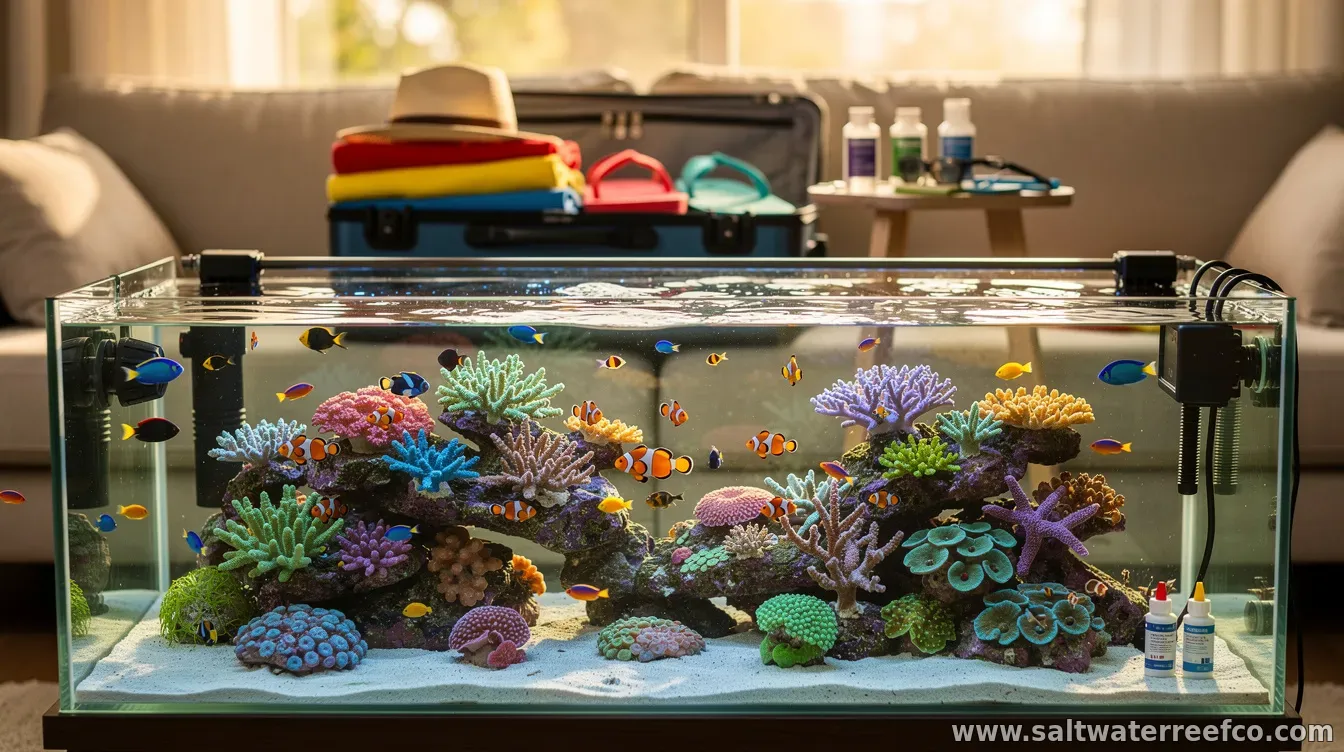
A healthy reef tank depends on stability—especially temperature, salinity, nutrient balance, and oxygenation. Before you leave for vacation, the goal isn’t perfection; it’s reducing risk with redundancy, clear feeding plans, and a “last-mile” verification day so automation doesn’t become a surprise problem. 1) Decide what you’re solving (and for how long)Confirm your exact time away and what your reef setup includes (corals, fish count, clean-up crew, refugium or no refugium, dosing system, ATO, heaters/chillers, return pump, skimmer). Then match the plan to the most sensitive items: temperature control, salinity/evaporation, and feeding consistency. 2) Feeding plan: reduce waste, keep routines simpleUnderfeeding is usually safer than overfeeding for short trips, but corals and some fish still need appropriate intake. If you have an auto-feeder, test it with your exact food and schedule. If you’ll rely on a sitter, pre-measure portions and specify frequency in writing, including what to do if feeding runs late. For most vacation scenarios, keep feeding modest and avoid “extra feeding” to compensate for your absence. Uneaten food can spike nutrients and fuel algae or stress sensitive invertebrates.
3) Power and temperature: the non-negotiablesMost vacation tank failures trace back to heat/cooling problems, pump outages, or power flickers. Verify heaters/chillers are functioning and set safely—then decide whether you need a battery backup for critical devices (at minimum, circulation and temperature control). Use timers/controllers where appropriate, but don’t assume they’re reliable—confirm the actual status in your controller/app. If you rely on Wi‑Fi monitoring, ensure the network will be available while you travel.
4) Salinity and top-off: plan for evaporationEvaporation is the silent salinity killer—especially if you run lights longer than usual, have a stronger fan, or your house HVAC changes while you’re gone. Confirm your ATO (auto top-off) and float/sensor settings. If you don’t have ATO, arrange a controlled manual top-off schedule and make sure dosing/top-off water is correct and uncontaminated. Test the ATO with the same water source you’ll use while traveling (RO/DI). Also ensure the reservoir won’t run dry during your trip.
5) Water quality: keep it stable, don’t chase numbersFor vacations, stability beats micromanaging. Avoid starting big changes right before departure (new salt batch, new media, drastic parameter swings). If you’re doing maintenance, complete it days in advance so any “settling” happens before you leave. If your system typically runs with a skimmer, carbon, or GFO/media, ensure those are loaded and functioning. For automated systems, confirm dosing lines are primed and that pumps are not air-locking. 6) Dosing, automation, and test strips: plan for “can’t fix it” scenariosDosing systems can help, but they can also amplify mistakes. If you normally dose, ensure dosing heads and tubing are secure, containers are filled, and you’ve verified correct programming. If you are uncertain about your setup’s reliability, consider whether pausing certain dosing during the trip is safer than letting it run unattended—this depends on your tank and your dosing regimen. Bring or prepare test supplies for your sitter (or confirm remote monitoring). Most reef keepers don’t need water-change heroics during short absences; they need systems that keep doing what they already do well.
7) Sitter-ready packet: clarity prevents panicThe best automation still needs human eyes if something breaks. Create a one-page “Reef Vacation Sheet” with photos of your tank, equipment list, and step-by-step instructions. Include contact info, where spare parts are stored, and how to recognize normal vs abnormal behavior. Also specify what not to do. For example, don’t replace media in the middle of your trip or “fix” parameters by dumping supplements unless you explicitly told them to.
8) Final “leave day” checksWithin 24 hours of departure, do a controlled walkthrough: verify equipment is running, lights timers are correct, ATO behaves normally, and temperature is holding steady. Confirm all media and pumps are seated and nothing is leaking. Then take baseline readings (temperature, salinity/SG, pH if you track it) and record them. Finally, send a message to your sitter with the baseline numbers and the exact plan. The objective is to make success repeatable for the first 12–24 hours after you leave—when the highest risk of surprises usually happens. Quick takeaway: Treat vacation mode as a “reduce variability” program—secure power and temperature first, then evaporation control, then feeding, and only then worry about water quality. With redundancy and clear instructions, most reef tanks can stay stable for typical vacation windows. | |
|
| |
Next & Previous posts