1:01 AM Marine ich (Cryptocaryon): diagnosis & treatment guide | |
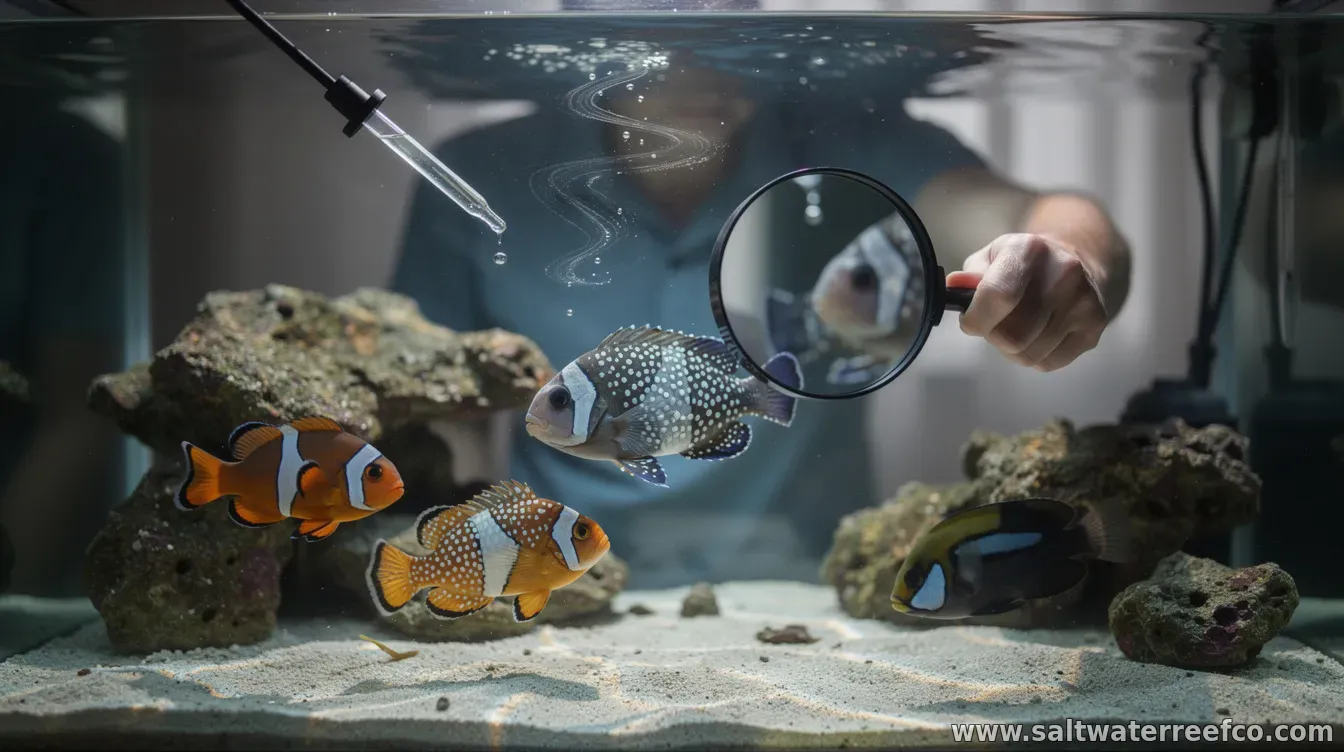
Marine ich, most often caused by Cryptocaryon irritans, is one of the most frequent parasitic diseases seen in saltwater aquariums. It can spread quickly because the parasite’s life cycle includes a stage that leaves the fish and persists in the tank environment. For that reason, successful treatment usually requires both accurate diagnosis and a plan that accounts for the parasite’s full cycle—not just visible symptoms. Owners often first notice subtle behavior changes before the classic “spots” appear: fish may flash (rub against rocks or sand), breathe faster, hide more than usual, or lose appetite. Infected fish can also show clamped fins or overall stress. As the infection progresses, small white/gray cyst-like spots become visible on fins, gills, or body. What to look for: diagnosing CryptocaryonWhile several aquarium parasites can resemble each other, Cryptocaryon typically presents with distinct patterns. Common signs include:
Temperature and timing can also matter: during warmer periods, the parasite’s life cycle may accelerate. If you suspect ich but aren’t sure, observe for progression over hours to a day—true Cryptocaryon signs often evolve in a consistent way rather than disappearing immediately. Treatment approach: interrupt the life cycleBecause Cryptocaryon includes an environmental stage, treating only the fish “on contact” may not be enough. Many outbreaks improve when aquarists combine fish-directed interventions with tank management that prevents reinfection. The most important practical goal is to ensure that parasites in the tank cannot successfully complete their cycle and reattach to hosts. In many home systems, that translates into either (1) treating the fish in a separate quarantine tank (preferred for cleaner control) while leaving the display tank without fish for a period, or (2) using a comprehensive display-tank plan that accounts for invertebrate sensitivity and filtration changes. Common supportive steps during treatmentSupportive care won’t “kill ich” by itself, but it can improve survival while treatment takes effect. Keep water quality stable (ammonia/nitrite/nitrate under control), maintain strong oxygenation, and reduce stress by lowering disturbance and avoiding major changes mid-treatment. If possible, focus food intake with small, consistent feedings—many fish recover better when they continue eating. Be cautious with aggressive handling: netting, rearranging aquascape, or frequent transfers can worsen stress at exactly the time fish need stability. Medication and temperature: use carefully, with the right targetCommon treatment options in marine aquariums may include medications specifically intended for marine ich and environmental management strategies. Some aquarists also raise temperature gradually within safe limits to speed up the parasite’s timetable so it’s exposed and cleared sooner. However, the “right” temperature depends on the species you keep; not all marine animals tolerate faster metabolic changes equally. If you use any medication, follow the product’s label directions and ensure compatibility with your species and system (for example, many therapies can be harmful to certain invertebrates or sensitive biological filtration). Quarantine treatment is often more manageable because you can better control what is present in the tank. Quarantine vs. display tank: why it mattersWhen fish are removed to a quarantine tank for treatment, the display tank can be left without hosts. This “fallow” period aims to starve parasites that require fish to continue their cycle. The required duration can vary depending on temperature and your specific circumstances, but the underlying principle stays the same: if no fish are present, reinfection eventually ends. Without this component, fish may appear to improve only to relapse days later—an especially common pattern when environmental stages are still active in the display. When to seek backup: gills and severe casesIf you notice heavy breathing, visible irritation on gill areas, rapid deterioration, or fish that stop eating, treat as urgent. Marine ich can become difficult to manage when the gills are significantly affected or when secondary bacterial infections take hold. In those cases, consider consulting an experienced marine veterinarian or an established aquatic-health professional for species-specific guidance and to confirm the diagnosis. Finally, prevention is often easier than rescue. Quarantine new arrivals, monitor closely for early behavioral changes, and maintain stable conditions. Early detection—before the “salt grain” stage becomes widespread—dramatically improves the odds of a smooth recovery. | |
|
| |
Next & Previous posts