0:22 AM RO/DI Water Explained: Why It Matters for Aquarium Health | |
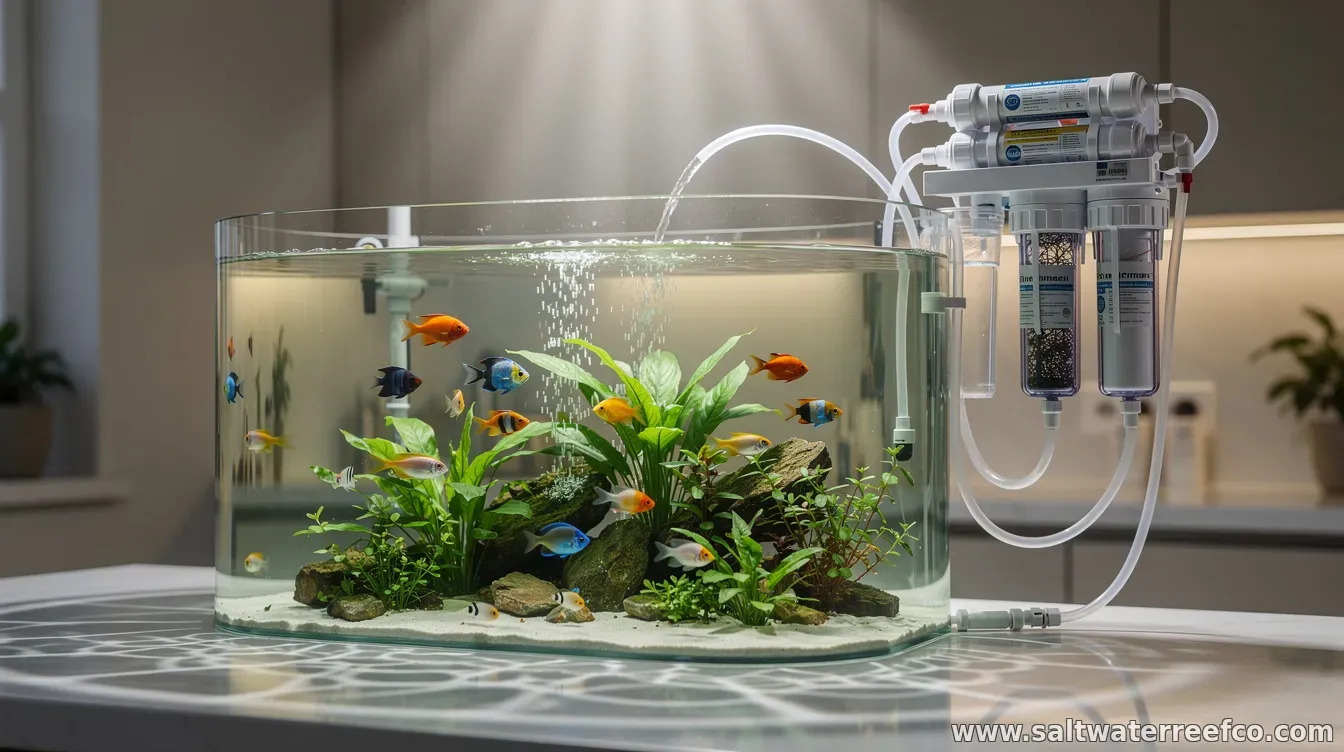
RO/DI water has become a cornerstone of modern aquarium keeping, especially for reef tanks, delicate freshwater setups, and planted aquascapes that depend on consistent water chemistry. The key idea is simple: RO/DI systems strip away dissolved solids and impurities so aquarists start with a cleaner baseline. In practice, that cleaner baseline can mean fewer swings in hardness and total dissolved solids (TDS), less nuisance algae driven by unstable nutrients and minerals, and reduced buildup in equipment. While RO/DI doesn’t replace good husbandry, it helps you control the inputs—one of the most effective ways to support long-term aquarium health. What RO and DI meanRO stands for reverse osmosis. It pushes water through a semi-permeable membrane that rejects many dissolved contaminants, including a large portion of salts, heavy metals, and other dissolved solids. After RO, the water often still contains trace amounts of certain substances depending on the source water and the system’s performance. DI stands for deionization. DI units—typically using mixed-bed ion-exchange resin—polish the RO output by removing the remaining ions. The result is water with very low TDS, which is typically the target for aquarium use. Why low-mineral water helps aquariumsMany aquarium issues are indirectly tied to dissolved minerals and contaminants. Using RO/DI water can help prevent or reduce problems such as:
For reef aquariums in particular, consistency is critical. Corals and many invertebrates respond strongly to small changes in water chemistry, so reducing variability in top-off and salt-mix water can support stable parameters over time. Where aquarists use RO/DI waterRO/DI water is commonly used for several high-impact tasks:
Even in freshwater tanks, RO/DI can be valuable when your tap water is hard, high in TDS, or fluctuates throughout the year due to seasonal changes in water sources. RO/DI water isn’t a guarantee—maintenance still mattersRO/DI can significantly improve input quality, but it’s not a standalone solution. DI resin eventually exhausts, membranes wear over time, and filters can clog—especially if the feed water has high sediment or contaminants. That’s why TDS monitoring is a practical part of using RO/DI systems: it helps you confirm that the system is still producing low-TDS water. Equally important, aquariums still require proper filtration, stable temperature, appropriate nutrient management, and regular testing. In other words, RO/DI helps you reduce one major source of uncertainty, but good husbandry remains the foundation of aquarium health. If you’re deciding whether RO/DI is worth it, consider your current tap-water profile (especially TDS and hardness), how sensitive your livestock is, and how often your parameters drift. For many aquarists, the best results come from pairing RO/DI with consistent testing and a clear water-change routine. With controlled inputs and reliable monitoring, RO/DI water becomes more than a “purification step”—it turns water chemistry from a gamble into a manageable, repeatable part of aquarium care. | |
|
| |
Next & Previous posts