1:00 AM Reef Chemistry 101: Salinity, Alkalinity, Calcium & Magnesium | |
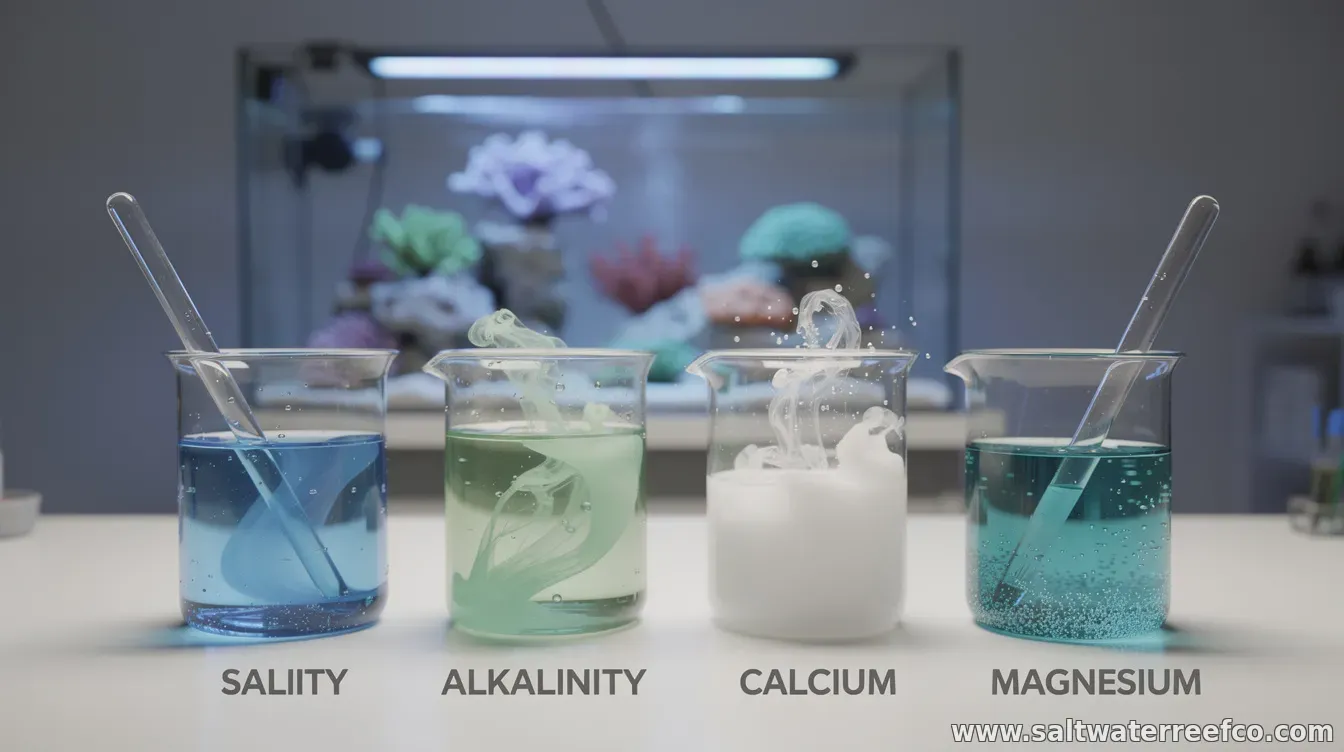
Healthy reef tanks depend on a stable chemistry backdrop. While many variables interact, most coral keepers focus on four core measurements: salinity, alkalinity (often described as “alk”), calcium, and magnesium. Together, these help determine whether your aquarium water supports strong coral growth and consistent calcification. Before adjusting anything, remember that reef chemistry is less about chasing perfect numbers and more about maintaining consistent conditions. Rapid swings can stress corals even when the water “eventually” reaches a target range. Salinity: the tank’s overall salt levelSalinity reflects how concentrated the dissolved salts are in your aquarium water. If salinity is too low or too high, corals and invertebrates can struggle to regulate internal fluids, and many biological processes can become less efficient. Salinity also affects how concentrated other ions are, which indirectly impacts calcium and alkalinity measurements. For beginners, the practical takeaway is straightforward: measure salinity regularly with reliable equipment and calibrate as needed. Use consistent measurement methods (temperature matters) so you can interpret changes correctly over time. Alkalinity: the “building block” for carbonate growthAlkalinity is commonly associated with the water’s capacity to buffer acids—chemically, it relates to the concentration of carbonate and bicarbonate ions. In reef systems, alkalinity is tightly linked to how corals and coralline algae build calcium carbonate skeletons. When corals grow, they consume alkalinity and calcium. Many tanks therefore see alkalinity trend downward as demand increases. If your alkalinity drops too low, calcification slows, and corals may struggle to maintain their structures. Calcium: the mineral component corals useCalcium is the key “mineral” ion used during calcium carbonate formation. In a typical reef aquarium, calcium slowly decreases as organisms incorporate it into skeletons and shells. Calcium demand can be influenced by stocking level, coral growth rate, and the presence of calcifying organisms like coralline algae. For beginners, the main concept is coupling: calcium usually needs supplementation when corals are growing, especially if alkalinity is also being maintained. Testing both helps you understand whether your tank’s calcification demand is being met. Magnesium: the stabilizer that supports efficient calcificationMagnesium plays a different role than alkalinity and calcium. It helps prevent precipitation of calcium carbonate that would otherwise happen too easily. In practice, magnesium acts like a stabilizing influence—helping keep calcium and alkalinity available in the water rather than turning into unwanted solid deposits. If magnesium is too low, you may notice issues such as precipitation problems and difficulty maintaining stable calcium and alkalinity. Because magnesium is generally consumed more slowly than calcium and alkalinity, it often requires less frequent adjustments—but it still matters for overall balance. How these four parameters work togetherThink of reef chemistry as a system of inputs and consumption: corals and algae extract alkalinity and calcium, magnesium helps keep the carbonate chemistry “behaving,” and salinity sets the overall concentration context. Even when each parameter is within a typical range, stability over days and weeks often matters more than hitting a single instant snapshot. A helpful beginner mindset is to test, record, and adjust conservatively. If alkalinity is dropping, prioritize understanding why—growth, water changes, supplements, and evaporation/replace mechanics can all contribute. Practical next steps for new reef keepersStart with consistent testing and documentation. Choose dependable test kits or measurement tools, measure under similar conditions, and avoid adjusting multiple things at once. When changes are needed, make small corrections and re-test to confirm your adjustments are producing the intended results. As you gain experience, you’ll develop a feel for the “rhythm” of your tank—how quickly alkalinity and calcium are consumed, whether magnesium remains stable, and how evaporation affects salinity. That ongoing feedback loop is what turns reef chemistry from guesswork into steady, repeatable care. | |
|
| |
Next & Previous posts