1:03 AM Hanna vs Salifert vs ICP: Best Water Test Kits Compared |
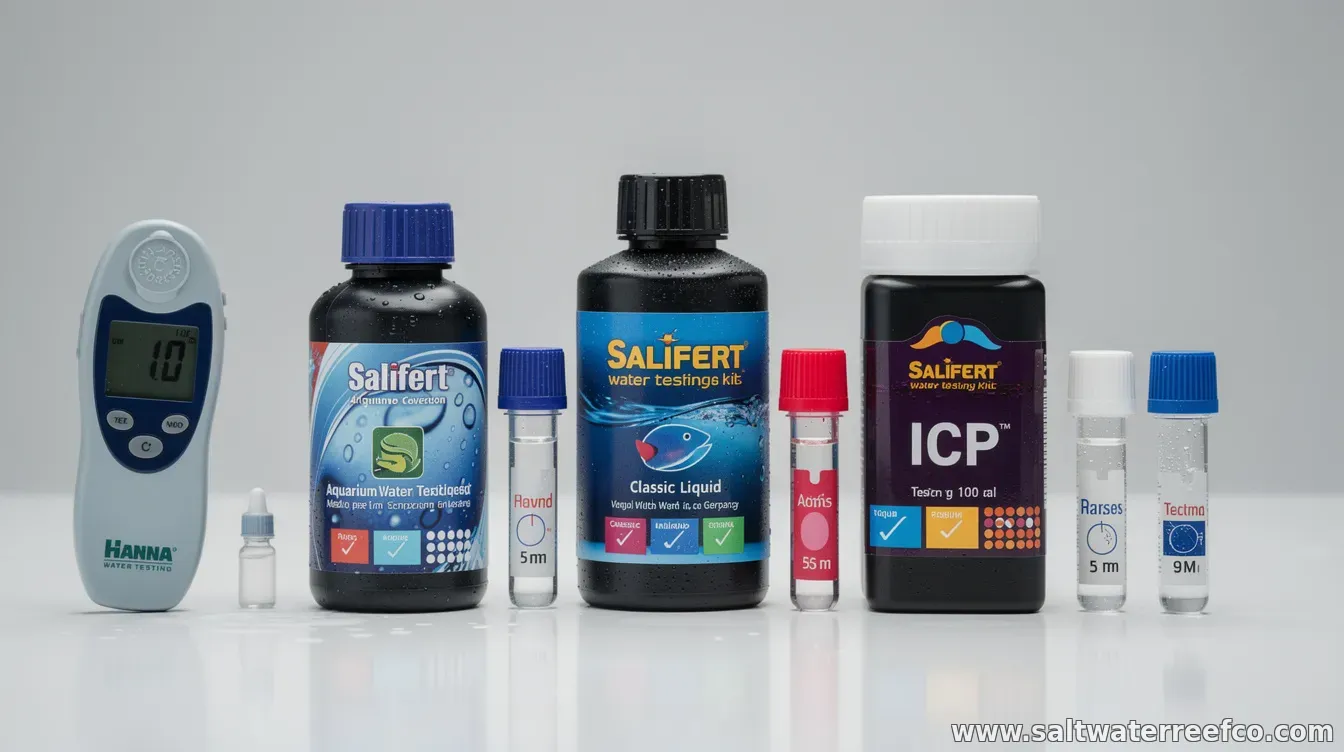
If you’re trying to measure water quality—whether for aquariums, pools, or lab-style monitoring—your “best” test kit depends less on brand names and more on what you need to measure, how precise you need to be, and how quickly you need results. This comparison covers three popular routes: Hanna handheld photometers (fast colorimetric readings), Salifert reagent-based titration kits (manual chemistry with a visible endpoint), and ICP-OES testing (sending samples to a lab for multi-element analysis). Hanna: quick, repeatable readings for specific parametersHanna’s strength is speed and convenience. Many Hanna devices are designed around individual tests (often limited to particular analytes), delivering results in minutes with minimal setup. For routine monitoring—especially when you want consistency from test to test—Hanna can be a practical choice. The tradeoff is that you may need multiple Hanna tests to cover a broad range of ions/metals, and the method can be sensitive to technique (e.g., sample handling, clean cuvettes, correct reagent use). For users who want fast feedback during maintenance, Hanna often fits well. Salifert: hands-on titration for control and transparencySalifert kits use a more classic approach: you add reagent dropwise or in measured steps until you reach a color change that indicates an endpoint. That can be appealing if you prefer direct, low-tech chemistry and like understanding the test process. Salifert can also be cost-effective for targeted parameters, but results depend on careful technique and correct reading of the endpoint. If you’re doing many tests frequently, manual titration can be slower and more operator-dependent than an electronic photometer. ICP testing: broad, multi-element results—but with delaysICP (commonly ICP-OES) testing is often the most comprehensive option because labs can detect and quantify many elements in a single run. If you suspect trace contaminants or want a wider “snapshot” than typical kit panels provide, ICP can uncover issues that single-parameter kits miss. The downsides are turnaround time (shipping and lab processing) and cost per test. ICP is also less convenient for day-to-day adjustments because it usually isn’t designed for rapid iterative changes. For many users, it’s best used periodically—such as when troubleshooting, confirming trends, or validating long-term dosing strategies. So which is “best” for you?As a rule of thumb:
If you’re unsure, a common strategy is to use Hanna or Salifert for regular monitoring and reserve ICP for verification and troubleshooting. That approach balances speed (for day-to-day decisions) with breadth (for identifying what you might not be measuring otherwise). For the most accurate comparison, also check each kit’s stated detection limits, measuring range, test method compatibility (sample type and preparation), and how often you’ll realistically perform tests. The “best” kit is the one that fits your measurement goals and measurement discipline. |
|
|
Next & Previous posts