5:38 AM Algae Blooms in Reef Tanks: Causes and Practical Solutions |
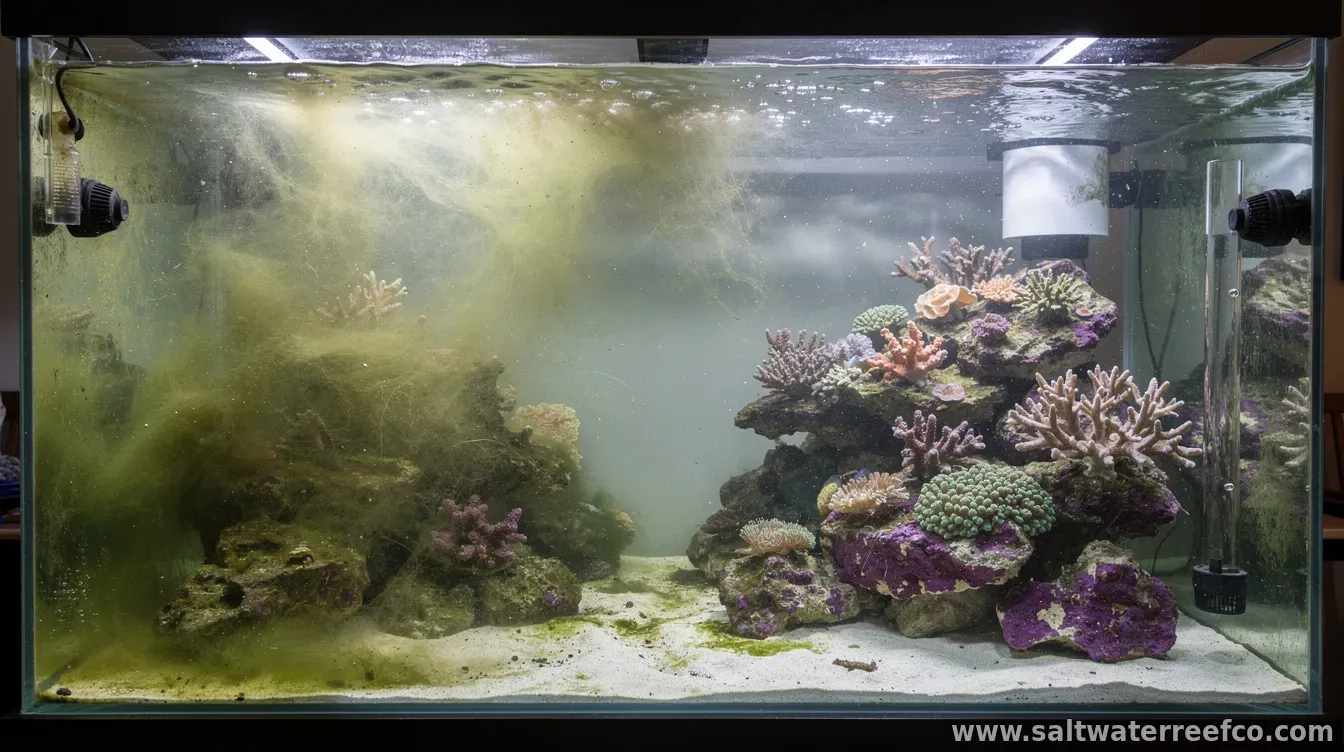
Algae blooms are a common frustration for reef keepers, especially in newer tanks or systems that recently changed. While algae can appear “overnight,” the underlying causes usually build gradually through imbalances in light, nutrients, and water chemistry. In practice, the fastest improvements come from narrowing down what’s driving growth. Different algae types (and different appearances) often point to different root problems—so careful observation is the first step toward a targeted fix. What typically causes algae blooms in reef tanksExcess light is one of the most frequent triggers. Too many hours under LEDs, high intensity aimed at the glass, or lights left on a “full day” schedule can feed photosynthetic algae faster than the tank can naturally balance it. Too many nutrients—especially excess dissolved nutrients—also fuels blooms. Elevated nitrate (NO3) and phosphate (PO4) can accumulate from overfeeding, heavy bioload, insufficient export, or incomplete filtration for the system size. Low or unstable flow can let algae settle and take hold. Areas of stagnant water—behind rockwork, under overhangs, or in corners—create microenvironments where detritus collects and nutrients become locally concentrated. Filtration or export mismatch can be another driver. A protein skimmer that’s poorly adjusted, a refugium running inconsistently, or media that has been exhausted can reduce the tank’s ability to remove dissolved organics and nutrients before algae use them. New-tank dynamics matter. During early cycling and maturation, nutrient levels, biofilm, and bacterial populations can shift rapidly, often leading to short-lived nuisance algae phases. Even established tanks can experience blooms after major changes like new lighting, rock re-aquascaping, or switching salt mix. How to diagnose the likely causeBefore changing everything at once, check a few baseline indicators. Test for nitrate and phosphate regularly, verify alkalinity stability, and assess feeding habits and tank cleanliness. Look for patterns: algae that smears or spreads quickly may behave differently than algae that forms mats or film. Also review your system’s “inputs and outputs.” Ask whether nutrients are being added faster than they’re removed, and whether high-light zones line up with the heaviest growth. For many hobbyists, the combination of high PO4, elevated NO3, and long photoperiods is where the problem concentrates. Solutions that work—without destabilizing the reefReduce light exposure gradually. Start by shortening the photoperiod by about 30–50% and ensure intensity and mounting position aren’t blasting the glass and sand. If you’re running a long schedule, step down slowly over several days to avoid shocking photosynthetic corals. Improve nutrient export and consistency. Aim for a system where export matches input. Many reef keepers fine-tune protein skimming, consider controlled media use (such as phosphate binders where appropriate), and evaluate whether the refugium—if present—is actually functioning as intended. Feed less and clean up detritus. Overfeeding is one of the simplest causes to correct. Offer smaller portions, remove uneaten food promptly, and siphon detritus during routine maintenance where safe. Keep an eye on how quickly the tank’s water clears after feeding. Increase or redirect water flow. Use powerhead placement and flow direction to reduce dead spots. Gentle, random-like circulation over the rockwork helps prevent settlement of detritus and limits localized nutrient “hot spots.” Physically remove algae strategically. Siphoning, scrubbing panels during water changes, and trimming nuisance growth can reduce biomass while chemical and biological fixes take effect. Be careful not to stir up excessive detritus all at once—especially in tanks with unstable nutrient levels. Consider targeted biological controls. Grazers can help, but they’re not a substitute for correcting the nutrient and light imbalance. Additions should be compatible with your tank’s ecosystem and should not be made solely as a “silver bullet” for persistent blooms. When to adjust and when to waitAfter making changes, give the tank time to respond. Many algae reductions lag behind improvements in nutrient levels because existing biomass doesn’t disappear instantly. Still, if you’ve lowered light, improved export, and corrected feeding, you should see a trend toward slower growth and cleaner surfaces over the following weeks. If the bloom worsens despite changes, re-check measurements and look for hidden inputs: new food types, unexpected source water issues, skimmer adjustment problems, or recently exhausted filtration media. In some cases, algae can reflect a broader stability issue—such as inconsistent alkalinity or a shift in the tank’s microbial community—that should be addressed as part of overall reef maintenance. With steady, measurable adjustments—light schedule, nutrient export, flow patterns, and feeding—algae blooms become manageable rather than mysterious. The key is to treat the bloom as a symptom of system imbalance, then rebuild stability step by step. |
|
|
Next & Previous posts