4:34 AM How Often to Change Water in a Reef Tank (Schedule) |
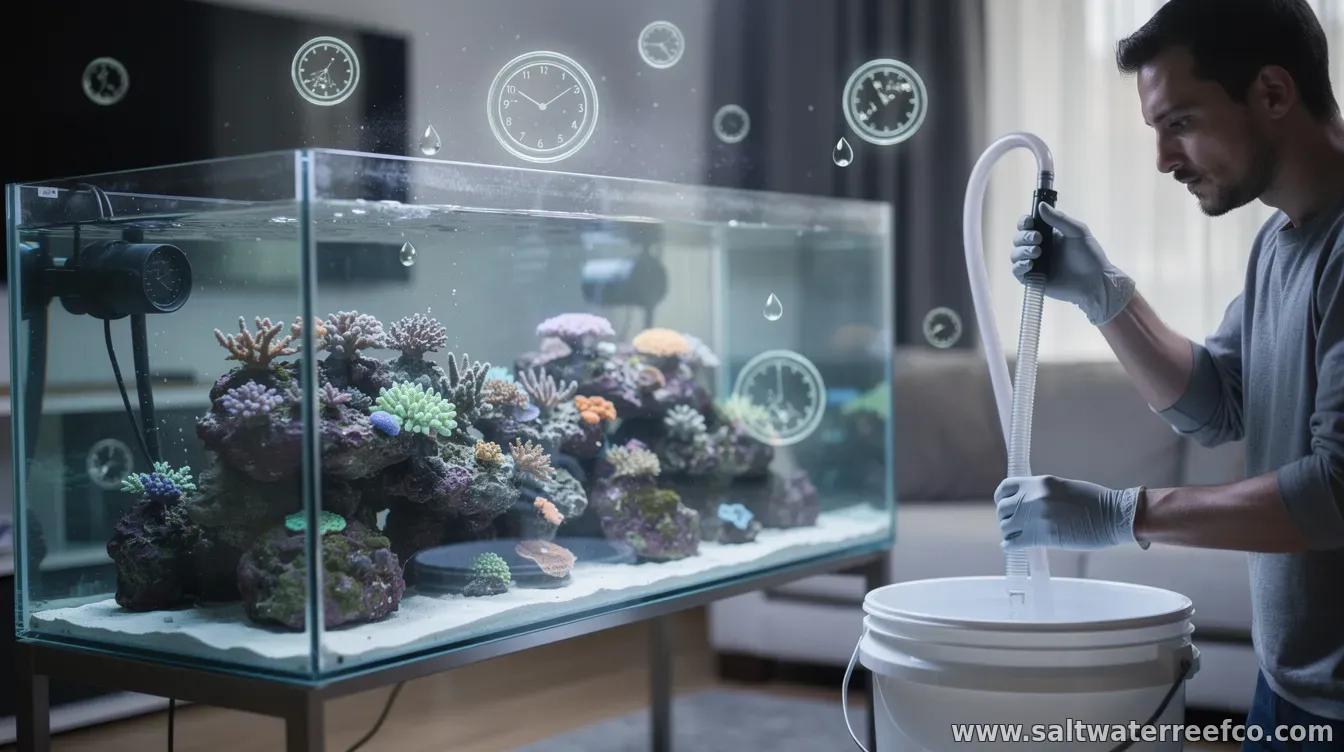
Water changes are one of the most practical maintenance tasks in a reef aquarium: they dilute dissolved waste, refresh trace elements, and help stabilize key water parameters. But the right frequency depends on how much “work” your tank is doing—how heavily it’s stocked, how strong the filtration is, and what your test results show. Below is a proven, step-by-step schedule you can follow in most reef setups, with guidance on when to speed up or slow down. Start with a baseline scheduleFor many mature reef tanks, a common starting point is a 10–20% water change every 2–4 weeks. If your tank is lightly stocked and tests are consistently in range, you may stay closer to the lower end (and change less often). If nutrients creep up or consumption is high, increasing either the percentage or frequency often helps. As a quick “rule of thumb” for planning:
Use a step-by-step method to set your exact cadenceStep 1: Test before you change. Collect baseline readings for at least these categories: nitrate (NO3-), phosphate (PO4-), alkalinity (and pH), salinity (specific gravity), and temperature. For newly established tanks, test more often because water chemistry can swing. Step 2: Choose the target range you want to maintain. Rather than reacting to one “bad” number, aim for consistent control over nutrients and stable alkalinity. When nitrate and phosphate are drifting upward together, it’s usually a sign you need more dilution—either by increasing the percentage changed or shortening the interval. Step 3: Pick a starting schedule and commit for 4–6 weeks. Make one adjustment at a time. For example, if you currently do 10% monthly and nutrients are rising, try 10% every 2 weeks (not both percentage and frequency at once). After a month or two, review test trends. Step 4: Adjust based on test trends, not just single readings. Repeated patterns matter more than day-to-day variability. If parameters rebound quickly after a change, the schedule may be too infrequent. If everything holds steady, you can often maintain or gradually ease off. Recommended schedule by tank stageEstablished, stable reef tank: Typically 10–20% every 2–4 weeks. This is the most common maintenance rhythm for reef aquariums with consistent growth and manageable nutrient levels. Heavily stocked or fast-growing coral systems: Consider 15–20% every 2 weeks, especially if you feed heavily, run a low-reactor approach, or notice nitrate/phosphate trending upward. New or re-stabilizing tanks: If the tank is still maturing, you may need more frequent, smaller changes (for example, 5–10% every 1–2 weeks)—but avoid drastic swings. Focus on stability and confirm salinity and temperature match precisely. Practical notes that matter as much as the scheduleMatch salinity and temperature. Sudden changes can stress livestock even if your “math” is correct. Mix saltwater thoroughly, verify salinity with a reliable refractometer, and bring it to the same temperature as the display before use. Pre-plan the method. Use consistent siphon technique to remove the same general volume from similar areas. Avoid stirring deep detritus unless you’re intentionally performing a planned, controlled cleanup—uncontrolled disturbance can spike nutrients. Track what the change accomplishes. After each water change, test again after a predictable time window (commonly a day or two) to see whether nitrates/phosphates are trending down, stable, or bouncing back. When to increase or decrease water changesIncrease frequency or volume if you repeatedly see nutrients rising, algae outbreaks, or inconsistent control over nitrate and phosphate. Decrease frequency or volume if parameters stay stable and you’re not chasing issues—overdoing water changes can introduce extra variability and may dilute beneficial dosing approaches or trace element strategies (depending on what you run). The “best” schedule is the one that keeps your tank stable with minimal disruption. Start with a baseline (10–20% every 2–4 weeks for many tanks), then refine it using a simple feedback loop: test → change → observe trends. If you share your tank size, approximate fish/coral load, and your current nitrate/phosphate readings, you can calibrate this schedule to a more precise plan for your specific reef. |
|
|
Next & Previous posts