0:39 AM Nano Reef vs. Large Reef: Costs and Complexity |
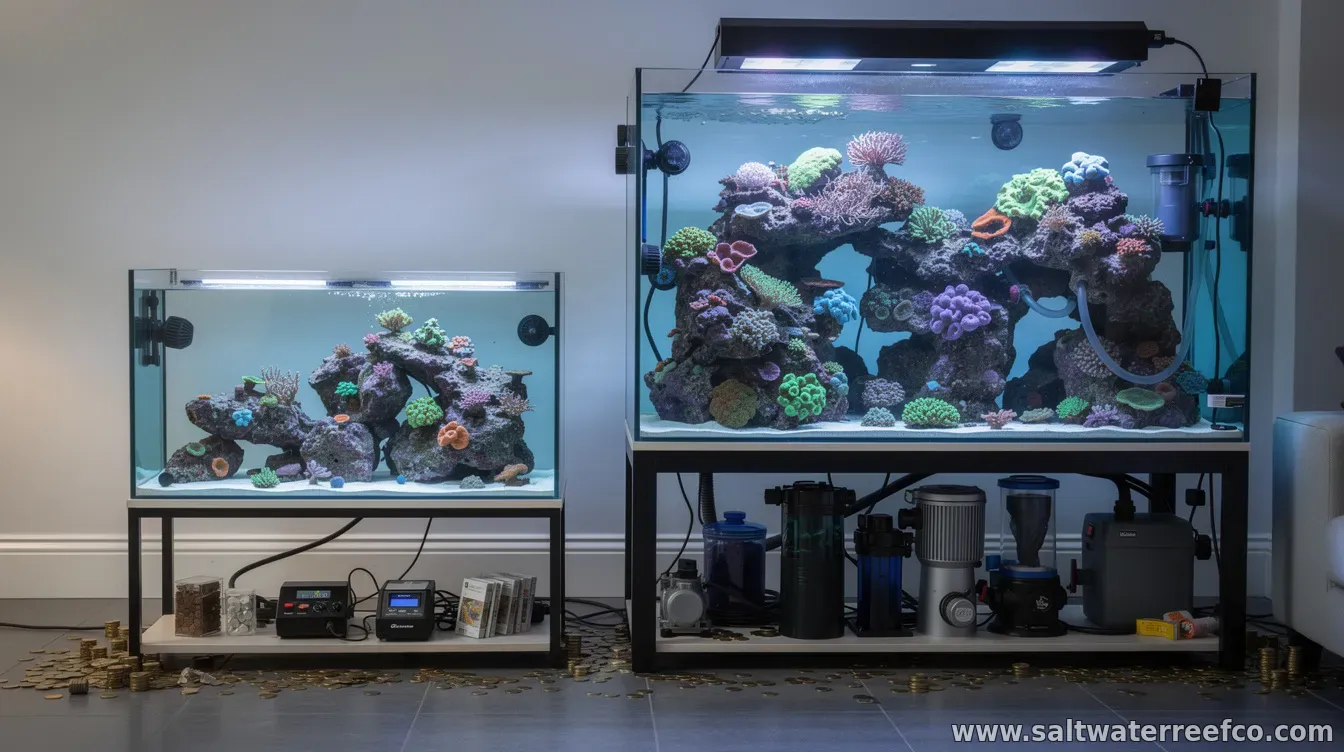
Choosing between a nano reef and a large reef is less about which is “better” and more about what kind of workload and budget you’re ready for. Both can produce stunning coral growth, but they differ sharply in how costs scale and how forgiving the system is when things fluctuate. Upfront costs: buy less space, not necessarily less equipmentNano reef setups (often roughly under 30 gallons) can look cheaper because you’re buying less glass and fewer gallons of saltwater. However, many core components scale poorly downward—especially lighting, filtration, and reliable monitoring. High-quality LEDs, heaters, properly sized pumps, and testing kits still matter, and you may need two or more power sources in different places to ensure adequate water movement. Large reef tanks usually cost more in absolute terms—tank size, stand, heavier equipment, and more substrate and salt add up fast. Still, the “per gallon” cost for some categories can be lower, and you can spread functions across larger, often more stable hardware (for example, a bigger sump and refugium). Ongoing costs: stability vs. usage ratesOperating a nano reef often means higher relative effort for stability. Because the water volume is smaller, temperature swings, evaporation, and feeding can change key parameters quickly. That can increase costs indirectly—more frequent top-offs, potential salinity correction tools, and more regular test schedules. You may also replace consumables sooner depending on filtration choice and how hard the system runs. With a large reef, water chemistry can be more buffered. Changes happen more slowly, which can reduce the frequency of corrective actions. Electricity use can be higher because pumps and lights are bigger, and you’ll be mixing more saltwater for water changes or top-off. But for many keepers, the steadier baseline can lower “reactive” expenses (repeated dosing corrections, rushed replacement of stressed livestock, and last-minute troubleshooting). Complexity and maintenance: daily workload can differ by hoursNano reefs often shift complexity toward daily precision. Even small evaporation events can noticeably raise salinity. Similarly, adding food or algae-control efforts can move nitrate and phosphate levels faster, making timing and feeding discipline more critical. Many nano keepers end up performing brief check-ins more often—sometimes daily—especially with temperature and salinity. Large reef tanks can trade daily micro-management for systems-level oversight. Maintenance may be less frequent but more involved when it happens. Water changes can be heavier lifting, and changes to plumbing or equipment require planning. On the other hand, the larger volume and often more mature filtration approach can make it easier to recover from minor swings without immediate “panic fixes.” Risks and learning curve: what tends to go wrongIn nano reefs, the most common failure mode is rapid drift—small issues compound quickly. A stuck top-off, miscalibrated sensor, or overly heavy feeding can destabilize the tank before you notice. This doesn’t mean nanos are “hard,” but they are less forgiving. Large reef tanks tend to introduce different challenges. Early on, cycle timing, equipment sizing, and nuisance algae management can take more time due to scale. If something breaks, the impact can be bigger, but the system’s resilience can also help during troubleshooting—assuming you’ve designed redundancy and matched livestock choices to your filtration capacity. Which one fits your budget and lifestyle?If you’re constrained by space and want a manageable footprint, a nano reef can be a practical starting point—provided you’re comfortable with frequent monitoring and fast responses. If you want a “set up carefully, then maintain” rhythm, a large reef can align well with a longer planning horizon and a higher willingness to invest upfront. In both cases, the best predictor of success is the quality of your system design and your consistency with testing and husbandry. Choose the tank size that matches your available time for monitoring, your tolerance for rapid changes, and your budget for dependable equipment rather than the cheapest option. Bottom line: Nano reefs often lower initial costs and space requirements, but can increase daily complexity and the risk of quick parameter swings. Large reefs typically cost more upfront and can require more effort during bigger maintenance tasks, yet they can be more forgiving due to greater water volume and buffering capacity. |
|
|
Next & Previous posts