1:24 AM Why RO/DI Water Matters for Saltwater Aquariums | |
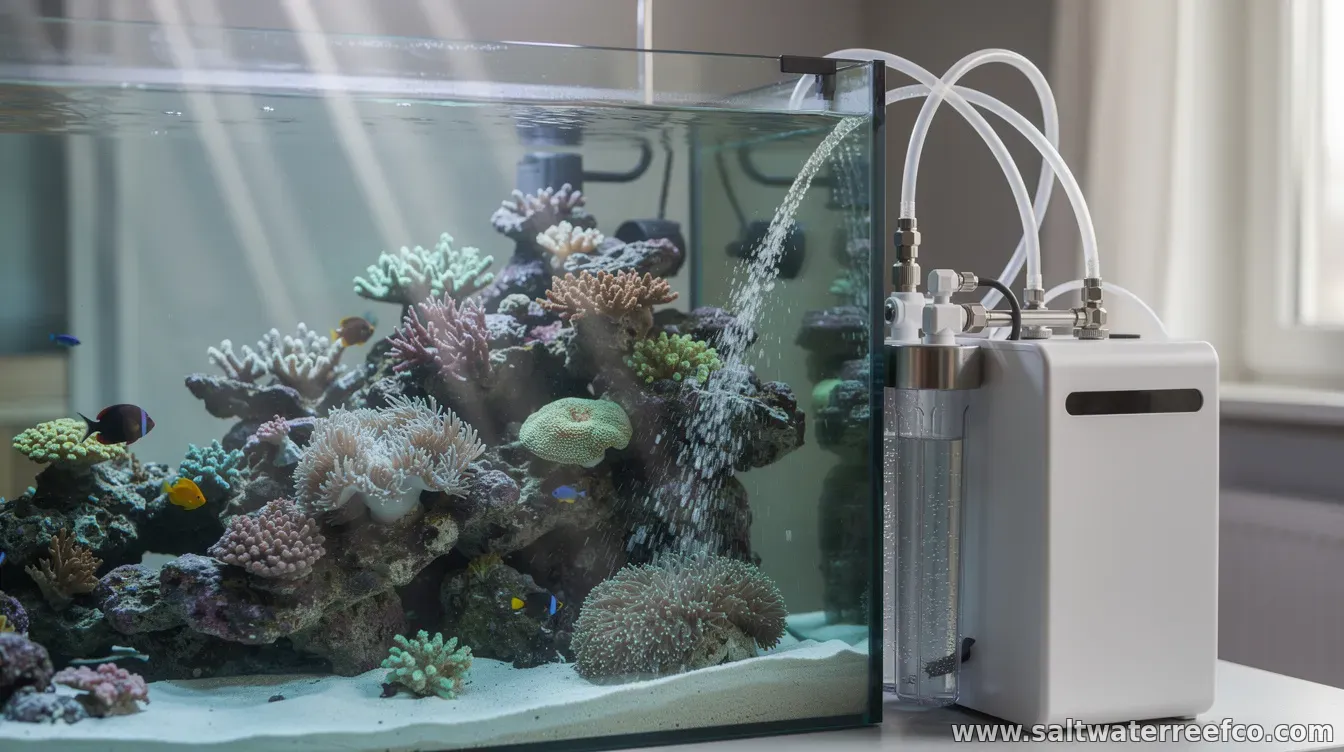
For saltwater aquarium owners, water quality is more than a number on a test kit—it’s the foundation for stable salinity, safer chemistry, and long-term coral health. That’s why many reef keepers rely on RO/DI (reverse osmosis/deionization) water instead of tap or even bottled sources. RO/DI systems strip out dissolved solids and impurities before you ever add salt mix. Tap water can contain calcium and magnesium, elevated total dissolved solids (TDS), trace metals, phosphates, and other contaminants that don’t always show up as obvious “toxins,” but still accumulate and push your tank’s chemistry off target. It lowers TDS and prevents mineral buildupThe “DI” stage is especially important because it removes the remaining ions that RO alone may leave behind. Lower starting TDS means fewer unwanted ions enter the system each time you top off or mix new saltwater—helping avoid gradual shifts in alkalinity, hardness, and overall ionic balance. Over time, even small mineral creep can complicate reef management. While testing might show normal parameters at first, accumulated contaminants can contribute to persistent issues like nuisance algae, film algae, or slow stress in sensitive invertebrates. It helps protect corals and sensitive invertebratesCorals and many invertebrates rely on clean, carefully controlled water chemistry. Impurities can increase the risk of stress responses, which may appear as reduced polyp extension, muted coloration, or poor growth. In tanks dominated by reef-building organisms, consistency matters as much as purity. Using RO/DI water also makes it easier to evaluate the tank’s real drivers. If your parameters drift, you can more confidently pinpoint causes in the aquarium itself—rather than wondering whether incoming water is quietly adding the variable. It can improve salinity accuracy and stabilitySalinity readings are influenced by the water’s dissolved content. With RO/DI, your baseline is cleaner and more predictable, so mixing salt mix to the target specific gravity (or using a refractometer properly calibrated) becomes more reliable. That reliability supports consistent top-off and water-change routines—helping reduce salinity swings that can stress fish and corals, especially in smaller systems with less buffering capacity. It reduces algae pressure and unwanted nutrient inputsSome tap water sources carry measurable phosphate or silicates. Even if they are present in small amounts, those nutrients can provide “fuel” for algae, including nuisance and diatom outbreaks. RO/DI doesn’t magically eliminate nutrients from the tank, but it limits extra nutrient introduction from your source water. Many reef keepers notice improved control over persistent algae problems after switching to RO/DI, particularly when paired with good feeding practices, effective filtration, and consistent maintenance. What to check before relying on RO/DIRO/DI water is only as good as the system’s current filtration media and the unit’s performance. A common best practice is to monitor the output TDS with a meter—ideally verifying that the DI resin is still doing its job and not “running exhausted.” Also consider maintenance intervals for pre-filters, the RO membrane, and DI resin. If any stage is underperforming, the water you produce may not be as pure as you assume. Ultimately, RO/DI water matters because it removes a hidden source of variability: the impurities and dissolved solids that can enter your tank with every gallon used for mixing and top-off. For reef aquariums—where small chemistry changes can compound—starting with cleaner water is one of the most practical upgrades you can make. | |
|
| |
Next & Previous posts