4:03 AM Sump vs. No Sump: Pros and Cons for Home Aquariums | |
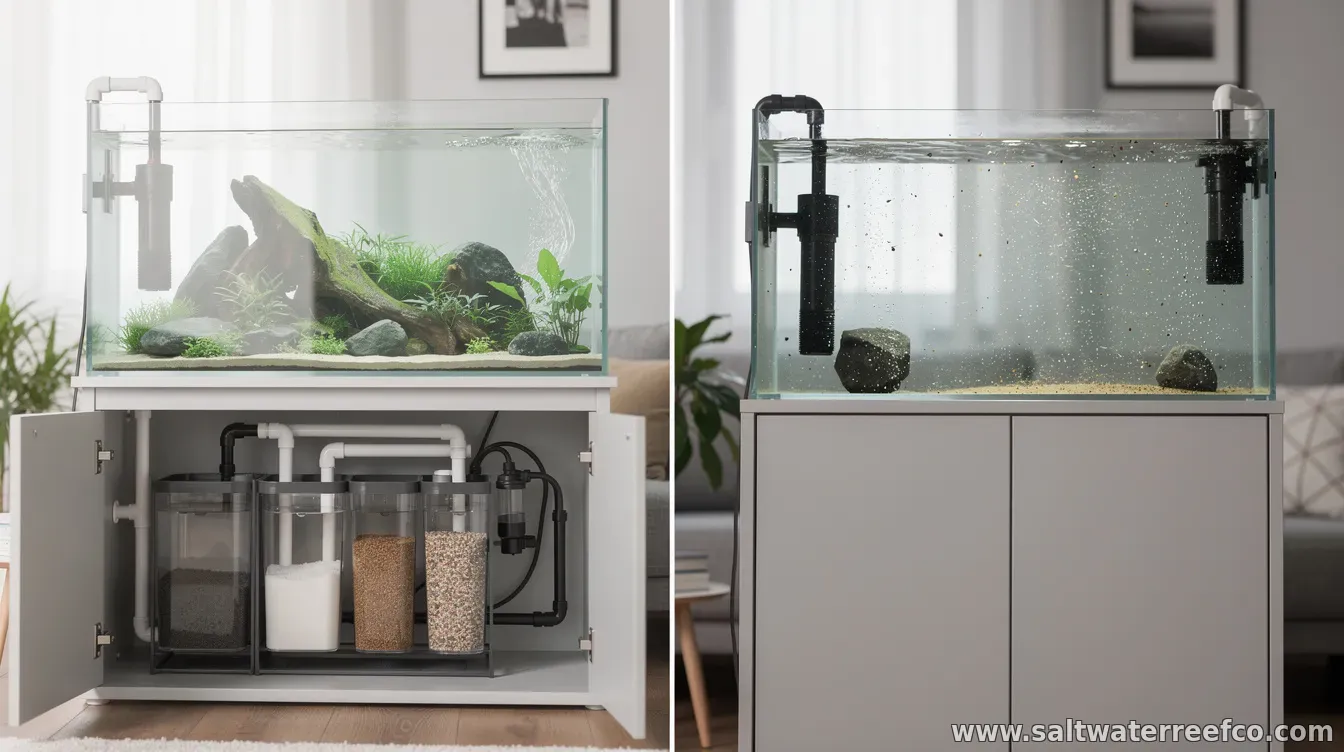
A sump can make a home aquarium more stable and flexible, but it adds plumbing, space needs, and maintenance. A no-sump (direct-to-tank) setup is simpler and often cheaper upfront, yet it can be more limited for filtration capacity and water-condition control. Sump aquariums: the main advantagesA sump is a secondary tank—usually located below the display—where water from the main tank is routed for extra filtration stages. This design can increase total water volume, which typically helps buffer temperature and chemistry swings. It also allows more modular equipment placement (e.g., protein skimmer, reactors, bio-media) without crowding the display. Another common benefit is noise and aesthetics. Many systems can keep louder equipment (skimmer, return pump) out of sight, while the display stays cleaner. Additionally, sumps can support stronger, more consistent filtration if you plan it thoughtfully—especially for sensitive species or high-bioload setups. Sump aquariums: trade-offs and drawbacksFor many hobbyists, the biggest downside is complexity. You’ll need a safe overflow/drain approach, return plumbing, and enough space and ventilation where the sump sits. Leaks are low-probability but high-impact, so careful installation and routine checks matter. A sump also increases day-to-day maintenance—filter media changes, skimmer tuning (if used), and occasional troubleshooting of pumps and lines. Cost can be another factor. While sumps can pay off by enabling more effective filtration, the combined price of tank, baffles/parts, plumbing, pumps, and stand modifications can be significant. Finally, operating behavior matters: if power goes out, your system needs a plan for back-siphon volume and safe water level recovery. No-sump (direct) aquariums: the key benefitsNo-sump setups route filtration directly in or at the back of the display (using hang-on-back filters, internal filters, canister filters, or integrated compartments). This often means a faster, simpler setup with fewer components to manage. For smaller tanks or beginners, direct setups can reduce setup time and make it easier to learn the basics of water quality and feeding without additional plumbing systems. They also tend to be easier to maintain and easier to diagnose when something changes. If a filter media clogs or a pump slows, the cause is usually visible and localized. In many cases, no-sump systems can work extremely well—provided filtration capacity matches the tank’s bioload and you maintain good husbandry. No-sump aquariums: limitations to considerThe main constraint is scalability and total filtration volume. Without a sump, you may have less room for advanced equipment or additional filtration stages, and the display compartment can become more crowded. Water-volume buffering is typically lower, which can make the system slightly less forgiving during temperature swings or chemical changes—particularly in larger or heavily stocked tanks. Noise and appearance can also differ by gear choice. Some no-sump filters are louder or more visible, which may matter depending on your tank location. Finally, if you want to run specialized processes—like reactors for carbon/gfo, dedicated skimming (common in marine systems), or extra biofiltration—it can be harder to integrate cleanly without dedicating more space or accepting compromise. In the simplest terms: choose a sump if you want maximum filtration flexibility, hidden equipment, and extra system stability—and you’re comfortable with additional plumbing and maintenance. Choose no-sump if you prefer simplicity, lower setup overhead, and straightforward upkeep while still matching filtration to your tank’s needs. Whatever you select, prioritize the fundamentals: reliable circulation, appropriately sized filtration for your livestock, consistent water-change habits, and a plan for evaporation and power outages (especially for sump systems). With those pieces in place, both approaches can succeed. | |
|
| |
Next & Previous posts