11:52 PM LED vs T5 vs Metal Halide for Reef Tanks: A Guide | |
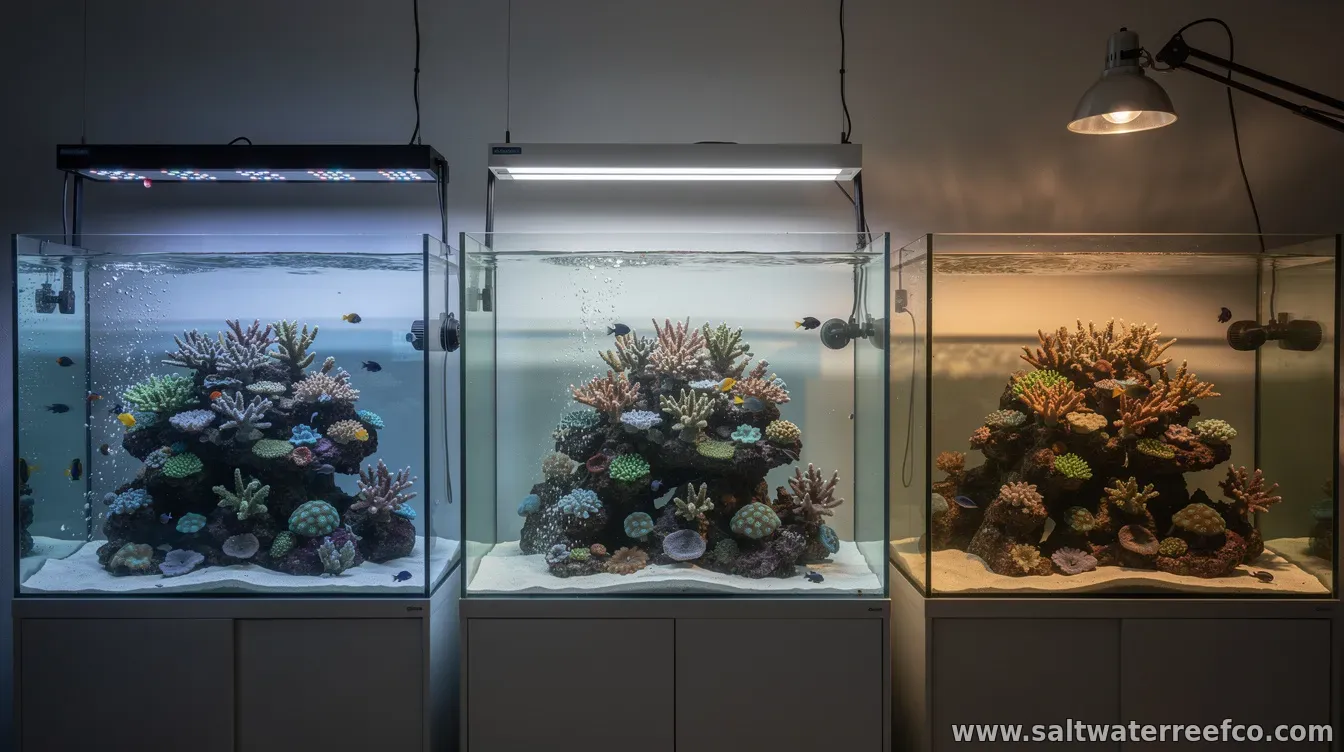
Reef tank lighting directly shapes coral growth, coloration, and overall tank stability. Whether you’re starting a new system or upgrading an existing one, comparing LED, T5, and metal halide helps you match the light source to your corals, layout, and budget. In broad terms, LEDs offer strong efficiency and control, T5 fluorescents deliver even coverage with proven reliability, and metal halides provide intense “natural-looking” shimmer but typically come with higher heat and maintenance needs. The best choice depends on what you keep (SPS vs LPS/soft corals), your tank depth, and how much tuning you want to do. LEDs: Best for control, efficiency, and flexibilityLED systems have become a top choice for many reef keepers because they’re energy efficient and allow precise programming of intensity, spectrum, and daily light cycles. Many fixtures use a mix of cool white, warm white, and supplemental channels (often including royal blue and sometimes UV/violet) to target photosynthetic needs while limiting unwanted spectral output. For mixed reefs, dimming and multi-channel control can make it easier to acclimate corals to new light and to dial in results over time. LEDs also tend to generate less heat into the water than metal halides, which can reduce strain on chillers and help maintain stable temperatures. T5: Excellent coverage with consistent, even brightnessT5 fluorescent lighting is valued for its even spread and smooth spectrum across the tank. A common reef configuration is multiple T5 bulbs in a reflective fixture, which can produce uniform illumination from front to back and reduce “hot spots” that sometimes occur with point-source lights. T5 systems can be particularly appealing for tanks that prioritize broad coverage and predictable results across a wide range of corals. The main drawbacks are that bulbs require periodic replacement for optimal output, and the fixtures can add a different heat profile than LEDs—though generally less than older metal halide setups. Metal halide: High intensity and shimmer, with higher upkeepMetal halide lighting is known for high intensity output and the classic shimmer effect many reefers enjoy. For deep tanks or SPS-heavy setups where light penetration is critical, metal halides can deliver strong performance without needing extremely complex arrays. However, metal halides typically produce more heat, can accelerate evaporation, and often demand more frequent bulb changes to maintain consistent spectral performance. Fans, ventilation, and careful fixture placement become more important, especially in warm climates or tightly enclosed stands. Which one is “best” for your reef?There isn’t a universal winner—each technology shines in different scenarios. If your priority is fine-tuning, efficiency, and easier temperature management, LEDs are usually the best starting point. If you want broad, even light distribution with a simple, proven fluorescent approach, T5 can be a strong fit. If you want maximum punch, dramatic shimmer, and you’re ready for the higher heat and maintenance considerations, metal halide may be worth considering. To choose confidently, base your decision on coral goals and tank depth, then plan for acclimation. Regardless of the lamp type, start conservatively and increase intensity gradually, monitor coral response (polyp extension, color stability, and tissue health), and use testing and observation to refine placement and brightness over time. For most reef keepers, the “right” answer is the system you can operate consistently—at the spectrum you want, the intensity you can measure, and the temperature stability your tank needs. With that foundation, any of the three approaches can support thriving reefs. | |
|
| |
Next & Previous posts