0:31 AM LED vs T5 Lighting for Reef Tanks: What’s Better | |
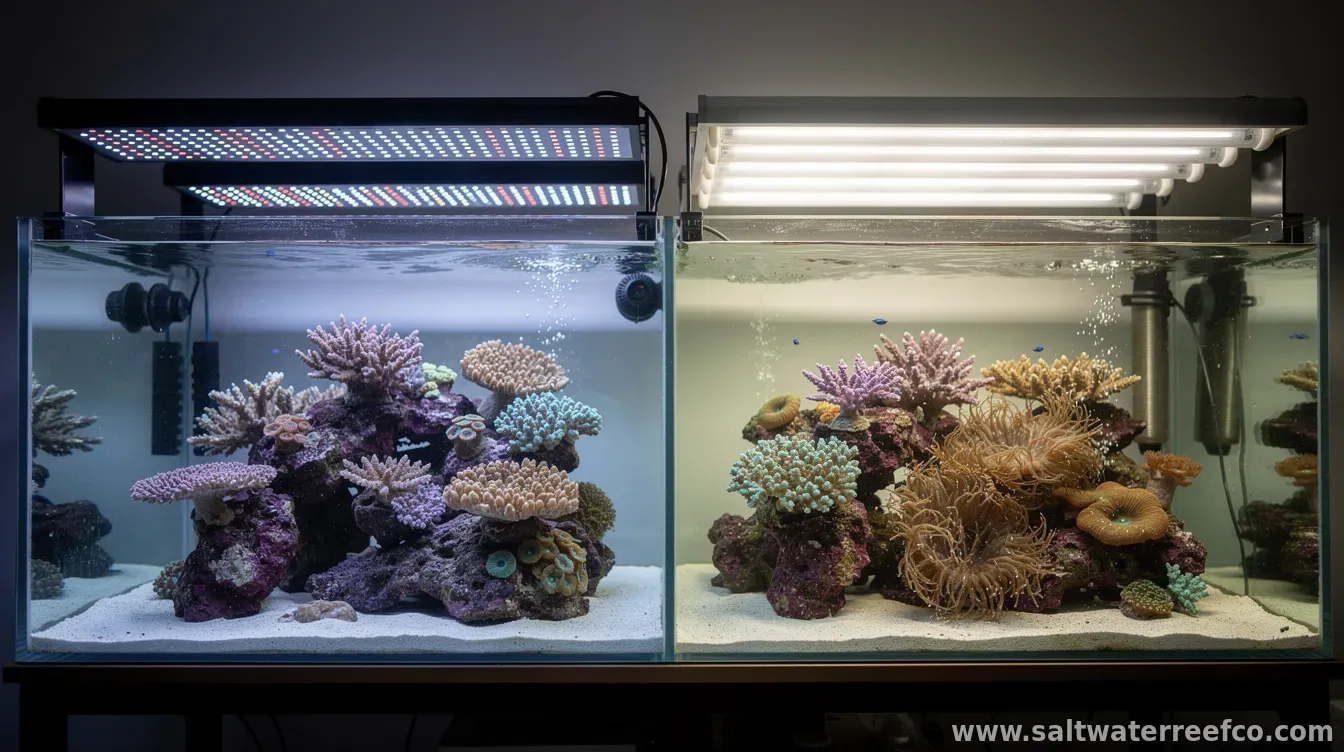
Choosing between LED and T5 lighting is one of the biggest decisions reef keepers make—because light affects everything from coral growth to color and overall tank stability. Both systems are proven, but they shine in different ways depending on tank size, coral types, and your budget for upfront gear and ongoing maintenance. In most reef setups, the “best” lighting is the one that delivers the right spectrum and intensity evenly across the tank while matching your tolerance for heat, electricity use, and bulb replacement or fixture upkeep. What matters most for reef lightingBefore comparing LED vs T5, it helps to focus on reef-specific outcomes. The key goals are uniform coverage (so corals at the top and bottom receive similar light conditions), appropriate spectrum (to support photosynthesis and coral pigmentation), and stable output over time (to avoid sudden drops that can stress sensitive species). Practical constraints—like tank dimensions, mounting height, and whether you’re trying to grow mostly SPS (small polyp stony corals) or a mixed reef—also determine which system will feel smoother day to day. LED lighting: flexibility and efficiencyLED fixtures are popular because they typically offer strong energy efficiency, low operating heat, and strong controllability. Many LED systems allow programmable schedules and fine-tuning of intensity and spectrum. That can be a real advantage if you want to dial in lighting for different coral zones or gradually acclimate corals after installation. Modern LED fixtures can also be designed for relatively even spread, especially with lenses and appropriate layout. However, coverage can vary significantly between models—two LED fixtures with the same “watts” may perform differently if one is better optimized for your tank size. Another consideration is long-term performance: LEDs usually don’t “burn out” the way T5 bulbs do, but they do degrade over time. Many brands publish expected output retention, which is useful when budgeting. If your fixture’s spectrum or intensity can’t be adjusted enough, an LED system may require replacement sooner than expected for very light-demanding corals. T5 lighting: even brightness and proven simplicityT5 fluorescent lighting is often favored for its even, consistent output across the water column. High-quality T5 setups can deliver excellent results for SPS-dominant tanks because the light is spread across multiple bulbs with predictable performance. T5 systems can also be straightforward: once set, the lighting output is generally stable until bulbs age. For many reef keepers, the biggest “trade-off” is maintenance. T5 bulbs require regular replacement intervals to maintain spectrum and intensity. While the fixtures themselves are often reliable, ongoing bulb costs are a real factor over the lifetime of a reef lighting plan. Heat is another difference. T5 fixtures usually produce more radiant heat than LED, which can be either helpful (slightly offsetting chilling needs) or undesirable (increasing room heat and evaporation, and potentially raising cooling demands). Which is better: a decision guideIf you want the most practical framing, think in terms of what you’re optimizing for:
Tank geometry matters, too. For larger tanks, a T5 array can be engineered for even coverage across a wide area, while LED performance depends heavily on fixture design, number of diodes, and mounting height. In shorter tanks, both options can work well; in deeper tanks, getting adequate intensity to the bottom becomes more critical regardless of technology. The “better” answer for most reef keepersFor many hobbyists, LED is the better default choice because it’s flexible, efficient, and easier to customize without constantly changing bulbs. T5 remains a strong contender—especially for those prioritizing smooth, even light distribution and reliable coral response from day to day. Ultimately, the most reliable path is to match your lighting to your coral goals and your tank dimensions. If you can, use a PAR meter to confirm that your corals are receiving appropriate intensity and that the light spread is even where it matters. Proper acclimation and consistent schedules—regardless of LED or T5—tend to determine success more than the technology itself. | |
|
| |
Next & Previous posts