2:35 AM How to Choose a Protein Skimmer: Buyer’s Guide | |
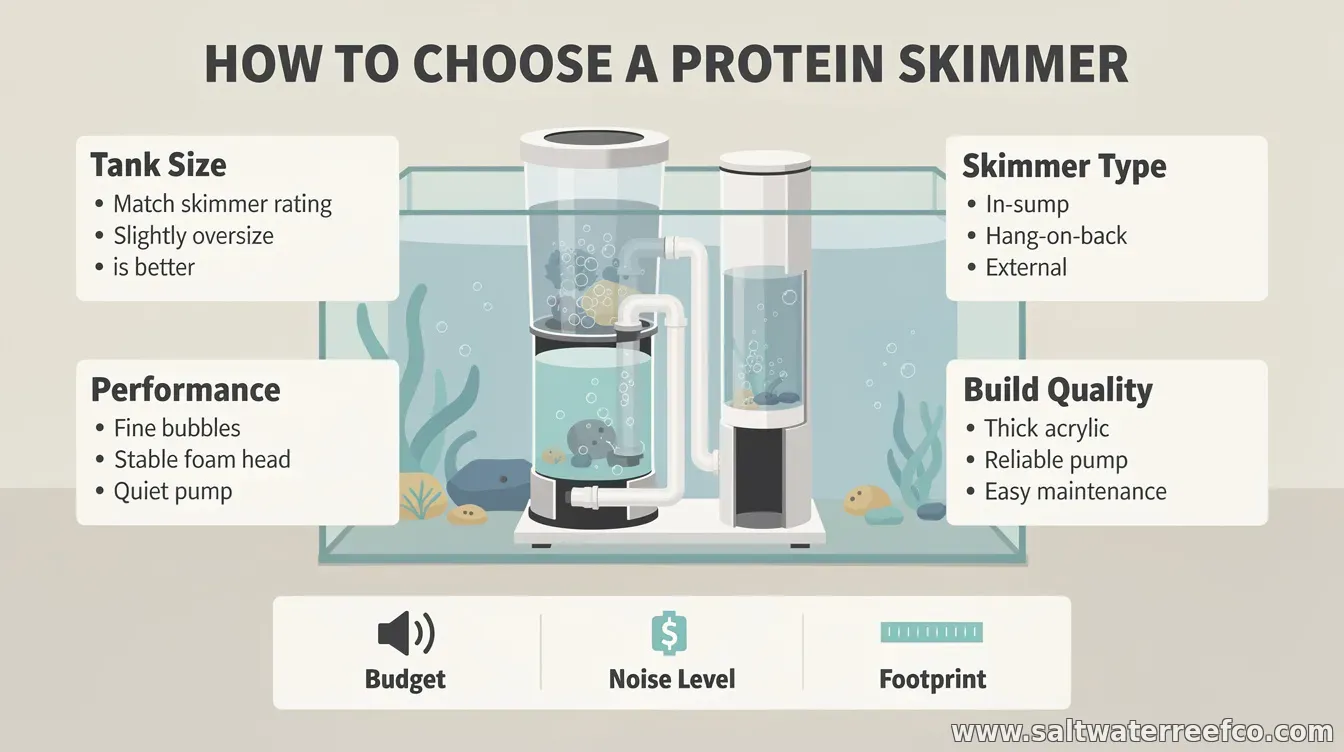
Protein skimmers are a core piece of equipment for many reef and marine aquariums because they remove dissolved organic compounds before they break down into more problematic nutrients. But not every skimmer is a good fit, and “bigger” isn’t always better. A smart purchase starts with matching performance to your tank and maintenance reality. Below is a practical buyer’s guide to help you choose a protein skimmer by reading the right specifications, avoiding common mismatches, and selecting features that will make daily operation easier. 1) Start with tank size and real bioload—not just tank volumeThe first decision is sizing. Manufacturers often provide “rated tank size,” but these numbers can be optimistic and based on specific assumptions. To choose more accurately, consider your bioload: fish count and feeding frequency, whether you keep coral-heavy systems, and how much organic waste your tank generates. A good rule is to size based on expected organic load. If you run heavy feeding, have a dense fish population, or aim for ultra-low nutrient goals, you may benefit from a skimmer designed for a larger range than your tank’s nominal volume. 2) Match the skimmer to your sump and space constraintsBefore comparing price, check physical fit. Measure available sump or display space and account for clearance around the skimmer body, cup, and plumbing connections. A skimmer that performs well on paper can become impractical if it’s too tall, too wide, or difficult to service. Also confirm whether you need a specific plumbing setup (for models that require certain water depths). If you’re running a high-flow sump design, verify that the skimmer’s requirements align with how your system is plumbed. 3) Prioritize air intake and contact time (the “how it works” specs)Protein skimmers work by pulling air into the skimmer body so that fine bubbles increase the contact time between water and organics. When comparing models, focus on performance indicators that relate to air-water processing. Look for specs such as air draw (often listed as liters per hour or similar units) and design features that promote consistent foam production. Internal design matters too: cone skimmers often use a narrowing body to help foam stability, while other designs may rely on different diffusion or recirculation paths. If two skimmers are similarly sized but one reliably produces darker, thicker skimmate in reviews (with realistic setup), it often signals better bubble formation and improved processing. 4) Consider pump type, energy use, and noiseMany skimmer models use proprietary pumps or specific pump sizes. Pump choice affects power draw, maintenance schedules, and noise levels. If your aquarium is in a bedroom or open living space, noise can be the deciding factor. Also factor in long-term costs: energy usage and the availability and price of replacement parts. Some owners prefer models that accept commonly available pump sizes or that have easy-to-service pump housings. 5) Evaluate water level requirements and ease of tuningSkimmer performance depends heavily on tuning. Models may require a precise water depth in the skimmer chamber (particularly for certain body designs). If your sump varies in water height due to evaporation or dosing behavior, you’ll need stable control—either from an ATO system or a consistently managed sump. Look for skimmers with adjustable features that make it easier to dial in the foam head without constant trial and error. If tuning is difficult or the collection cup is awkward to remove, daily operation becomes frustrating. 6) Don’t ignore build quality and cup designSkimmer materials and construction quality impact long-term reliability. Pay attention to the collection cup design, including how easily it fills, how well it seals, and how accessible it is for cleaning. A convenient cup reduces the chance of delayed maintenance—one of the most common reasons skimmers underperform. Check whether the neck and internal surfaces appear easy to wipe clean and whether the skimmer is designed to minimize salt creep and residue buildup in hard-to-reach areas. 7) Recirculating vs. non-recirculating: choose based on your system goalsRecirculating skimmers often emphasize efficient bubble production and can be a strong choice for tanks targeting lower nutrients and consistent skimmate. Non-recirculating designs may be simpler and easier to operate, depending on the model. There’s no universal winner—your decision should reflect your bioload, willingness to tune, and how stable your sump conditions are. If you already run a well-balanced system and mainly want reliable baseline skimming, simplicity may matter more than maximum extraction. If you’re pushing nutrient reduction, prioritizing robust air-water processing can justify a higher-cost unit. 8) Plan for maintenance and cleaning timeEven the best skimmer won’t perform well if you rarely clean it. Before purchase, consider how often you’ll likely perform routine maintenance and how long it takes you to remove and rinse the cup and clean the neck. If you foresee limited time, choosing a design with good accessibility and fewer hard-to-clean parts can deliver better real-world results than a model that looks impressive but is tedious to maintain. Also consider how quickly the skimmer “breaks in” after installation. Many skimmers require some initial adjustment before stable skimmate production occurs, and you’ll want to understand what that tuning process involves. Common buying mistakes to avoid
For the best outcome, compare skimmers using a combination of sizing guidance, air-water processing capability, adjustability, and maintainability—then look for community feedback that reflects similar tank conditions to yours. With the right match, a protein skimmer can become a dependable “set and refine” tool that keeps dissolved organics under control and supports long-term aquarium stability. | |
|
| |
Next & Previous posts