1:48 AM Custom Aquarium Design: From Idea to Installation | |
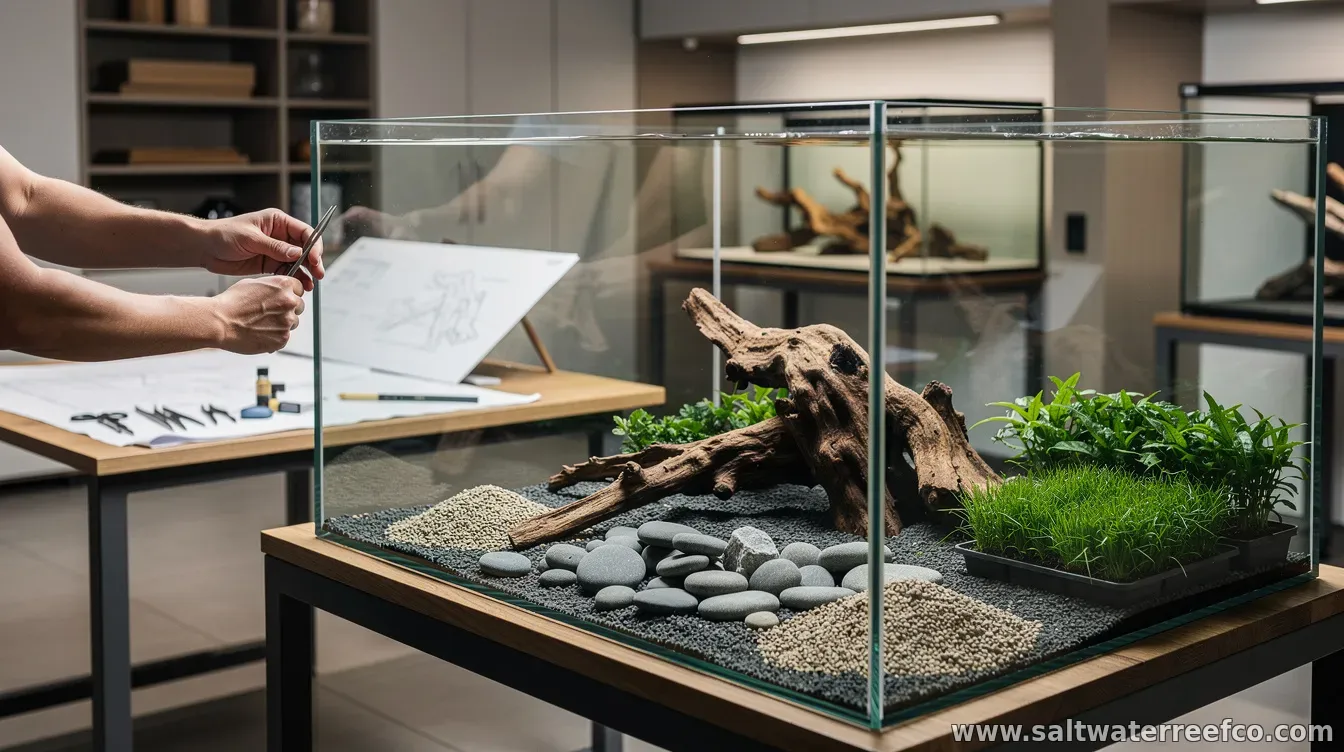
Custom aquarium design turns a concept—an idea for a showpiece centerpiece, a reef habitat, or a species-focused display—into a functioning ecosystem that looks great and stays stable. The process usually blends aesthetics with engineering, especially when glass thickness, plumbing access, power requirements, and filtration capacity must all work together. Start with goals, space, and a realistic scopeMost projects begin with a clear purpose: which fish or corals you want to keep, the overall look (open-water, planted, reef rockwork, biotope), and how much maintenance you can commit to. From there, designers measure the space and plan the tank’s footprint, viewing angles, and nearby outlets. Even small constraints—like cabinet height, wall studs, or a limited ability to route tubing—can shape the final design. At this stage, teams also define the “scope” of custom work: furniture build versus tank-only, standard equipment versus premium dosing systems, and whether the system needs built-in automation or easier service access for routine tasks. Plan the aquascape and engineering details togetherA successful custom aquarium pairs the aquascape with the supporting infrastructure. Designers consider substrate depth, rock or hardscape layout, and how organisms will be positioned for growth and behavior. Simultaneously, they plan equipment placement—filters, heaters, sumps (if used), protein skimmers, pumps, and water flow—so the display remains clean without sacrificing performance. Flow design is especially important. Circulation outlets, return lines, and internal pump placement affect oxygenation and nutrient distribution, and they influence how stable temperature and salinity remain over time. A good layout also accounts for maintenance: whether media changes are quick, whether valves can be reached, and how easily the system can be cleaned. Choose materials, lighting, and filtration for the target speciesLighting and filtration are where many custom projects become highly specific. Planted freshwater setups often prioritize spectrum control and plant-supporting light intensity, while reef or marine systems require lighting tuned for corals and stable water parameters. Equipment selection also depends on bio-load assumptions and whether the system will run as a closed-loop display, a sump-based setup, or a compact all-in-one configuration. Designers typically specify heater placement, temperature control methods, and backup redundancy where appropriate. For saltwater systems, salinity monitoring and safe top-off strategies (manual or automated) are key to preventing slow drift that can stress livestock. Finalize the build plan: power, plumbing, and safety checksBefore any installation begins, the plan is validated for safe operation. That usually includes confirming electrical capacity, drip loops, cable routing, and where surge protection will sit. Plumbing diagrams help ensure airtight connections where needed, minimize water-loss risk, and keep tubing accessible for replacement. Structural considerations matter too. Custom stands and cabinets must be level and engineered to support the tank’s total weight, including water, substrate, and hardscape. A stable base prevents long-term stress on seams and equipment. Installation and commissioning: from set-up to “ready”Installation typically follows a staged commissioning workflow. The stand and tank are leveled, plumbing and electrical connections are tested, and equipment is positioned for both performance and service access. Substrate and décor are added carefully, with attention to how placement affects water flow. After the physical build, the system enters a commissioning period—often including an initial fill, leak checks, filtration setup, and cycling for biological stability. Only after water parameters are stable do teams move toward adding livestock, usually starting with a controlled stocking plan to reduce shock to the ecosystem. By the end of the process, a custom aquarium should be more than visually impressive—it should be stable, maintainable, and aligned with the needs of the species you chose. When done well, the result is a display that looks intentional from day one and performs reliably well into the future. | |
|
| |
Next & Previous posts