0:47 AM Chaeto vs. Caulerpa in a Reef Refugium: Key Differences | |
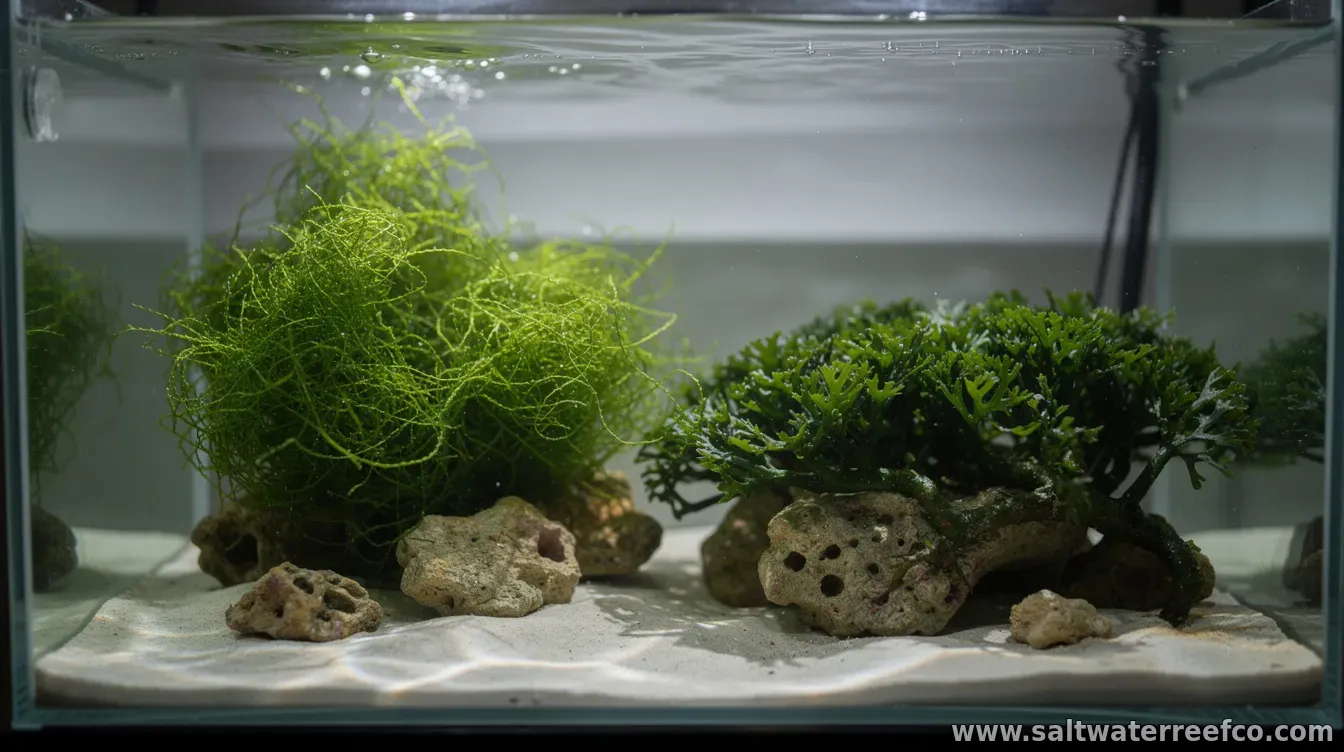
In reef aquariums, a refugium is often used to support beneficial algae that help absorb nutrients such as nitrate and phosphate. Two popular macroalgae options are chaeto (Chaetomorpha) and caulerpa (Caulerpa). While both can be effective, they differ in how they grow, how they respond to pruning, and the level of attention they require. At a high level, chaeto is usually favored for refugiums because it grows as a dense, clump-forming “ball” that is relatively easy to harvest. Caulerpa, by contrast, can grow differently depending on the species and conditions, including some forms that may attach, creep, or spread more aggressively if not managed. Growth pattern and refugium behaviorChaeto typically forms a thick mass that can be rotated or gently separated during maintenance. Its structure makes it straightforward to remove portions when it overgrows, helping keep the nutrient-uptake system stable. Caulerpa can vary by species, but many caulerpa types grow with branching “fronds” and may attach to surfaces or spread over time. If the refugium environment allows it to propagate efficiently, caulerpa can become less contained than chaeto—especially if it reaches areas you didn’t intend for it to occupy. Nutrient export: what to expectBoth chaeto and caulerpa can take up nutrients, but the real-world impact depends on lighting, water flow, and how consistently you harvest the algae. Nutrient control is generally improved when the macroalgae is allowed to grow and then is removed before it starts breaking down or exporting less efficiently. Chaeto is often perceived as more predictable in refugiums because it’s easy to keep in a controlled mass and to remove in regular portions. With caulerpa, keeping the growth in check and preventing unwanted spread are crucial so that you still achieve the “grow and harvest” loop without the algae becoming a maintenance problem. Maintenance and harvestingChaeto maintenance commonly involves periodic trimming and occasional mass rearrangement to ensure good light exposure throughout the clump. Many aquarists also use a refugium light schedule that supports steady growth without overheating the system. Caulerpa maintenance can be more involved. Because some caulerpa forms may spread or adhere to surfaces, successful husbandry often requires more frequent observation and careful pruning. If the algae is removed incompletely, regrowth can happen—sometimes quickly—depending on the species and local conditions. Risk considerations: algae going “out of control”A key concern with any macroalgae refugium is preventing large die-offs. When algae declines suddenly or breaks down in the tank, nutrients can be released back into the system. While both chaeto and caulerpa can face stress under poor conditions (for example, insufficient light or disrupted parameters), chaeto is widely chosen for its manageability and ease of harvesting. With caulerpa, the additional containment challenge—depending on species and refugium setup—raises the stakes for consistent control. Some reefkeepers prefer it because of certain growth and uptake characteristics, but they typically pair it with stricter routine monitoring and pruning discipline. Which should you choose?If you want a refugium macroalgae that’s generally easier to control, harvest, and keep contained, chaeto is often the practical choice. If you already have experience managing caulerpa, are prepared to monitor growth closely, and can keep it effectively contained in the refugium, caulerpa may still be a strong option—particularly for reef keepers who prefer its specific growth form. Ultimately, the best results come from matching the macroalgae to your refugium layout (lighting and flow), your maintenance frequency, and your goals for stable nutrient reduction. Regular harvesting—removing algae before it declines—matters as much as the species you select. | |
|
| |
Next & Previous posts