11:51 PM Why You Should Only Use RO/DI Water |
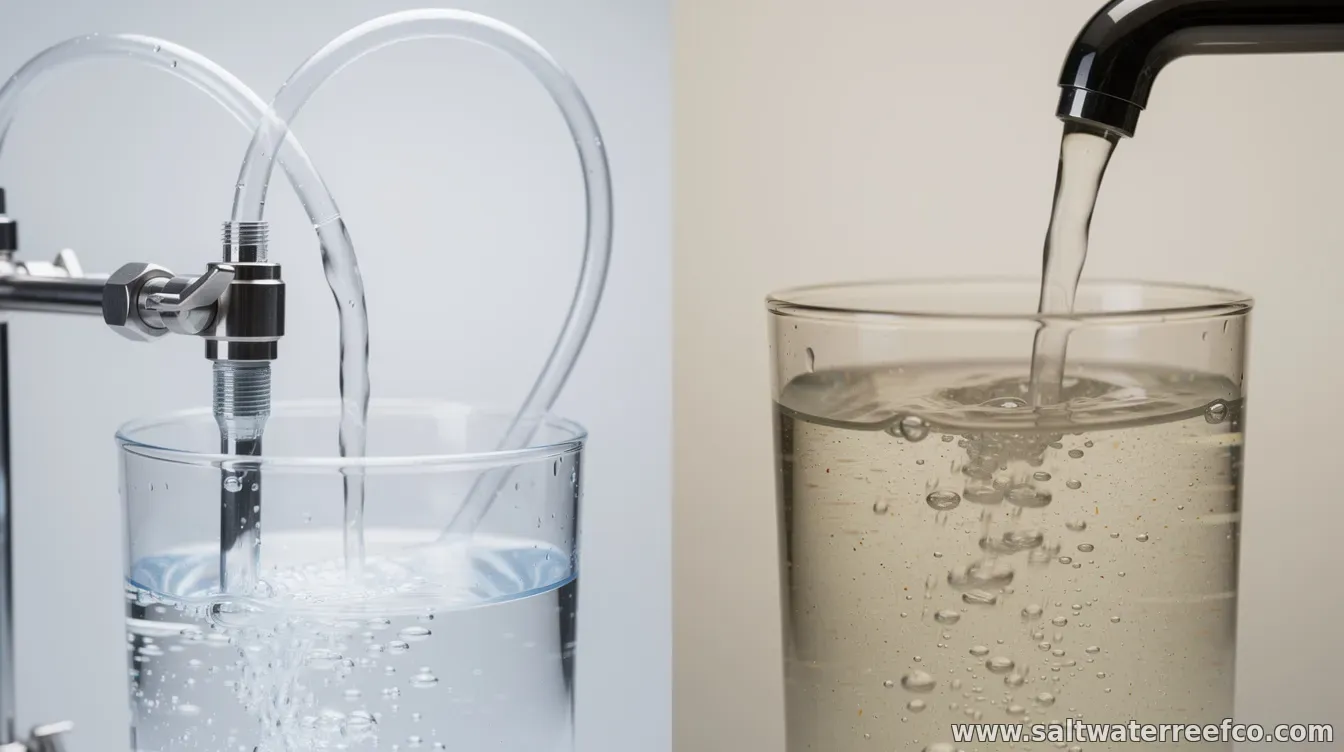
Using the right water is an unglamorous but critical choice in everything from water filtration systems to reef aquariums. Many users eventually land on RO/DI water—water produced by reverse osmosis (RO) followed by deionization (DI)—because it delivers consistently low levels of dissolved solids and contaminants. While tap water can vary by season, location, and treatment method, RO/DI is designed to remove the sources of variability that lead to residues, corrosion, and performance problems. RO removes dissolved solids; DI removes what’s leftRO systems push water through a semipermeable membrane to significantly reduce total dissolved solids (TDS). However, RO alone may not eliminate everything—trace ions can still remain. That’s where DI comes in: deionization uses resin to capture residual ions, aiming for water that is effectively “polished” to extremely low conductivity. This two-step approach is why RO/DI is often preferred when water purity matters more than convenience. Fewer minerals means less scaling and buildupOne of the most practical reasons to use RO/DI water is what it prevents. Minerals such as calcium and magnesium can accumulate as scale on heaters, pumps, tubing, and other components. Over time, scale can reduce efficiency, increase energy use, and require more frequent cleaning. With much lower dissolved mineral content, RO/DI water can help minimize the deposit problems that are common with untreated water sources—especially in systems that heat or evaporate water. In aquariums and mixing applications, consistency mattersFor aquarium keepers, RO/DI water is often used to control water chemistry by starting with a predictable baseline. When you combine RO/DI water with carefully measured additives, you can better target desired parameters rather than compensating for unknown incoming water composition. The same logic applies to other mixing use cases: consistent starting water reduces the risk of unexpected reactions, concentration swings, or “off” results caused by variable tap-water mineral levels. Why not rely on tap or distilled water?Tap water is convenient, but its TDS and ion content can change and may include minerals and other dissolved compounds depending on local supply. That variability can translate into inconsistent outcomes—whether that means more buildup in hardware or chemistry drift in water-sensitive systems. Distilled water is also highly purified, but it can be slower to produce and may still introduce impurities if storage and handling aren’t managed carefully. RO/DI, when maintained properly, is often a more scalable solution for ongoing needs. What to watch: DI resin capacity and system maintenanceRO/DI is not “set and forget.” DI performance depends on resin exhaustion; once the resin is saturated, it can allow TDS to rise. Many users manage this by monitoring output using a TDS meter and replacing DI cartridges when readings increase. Proper pre-filtration, membrane upkeep, and routine checks help ensure the RO stage keeps functioning efficiently—so the overall system continues delivering the low-purity water that users expect. In short, RO/DI water is popular because it targets the biggest causes of scaling, residue, and chemistry inconsistency: dissolved minerals and residual ions. If your results depend on clean water—whether for equipment protection, chemical mixing, or aquariums—choosing RO/DI is a practical way to reduce problems before they start. |
|
|
Next & Previous posts