0:31 AM Why Most DIY Reef Tanks Fail in the First Year |
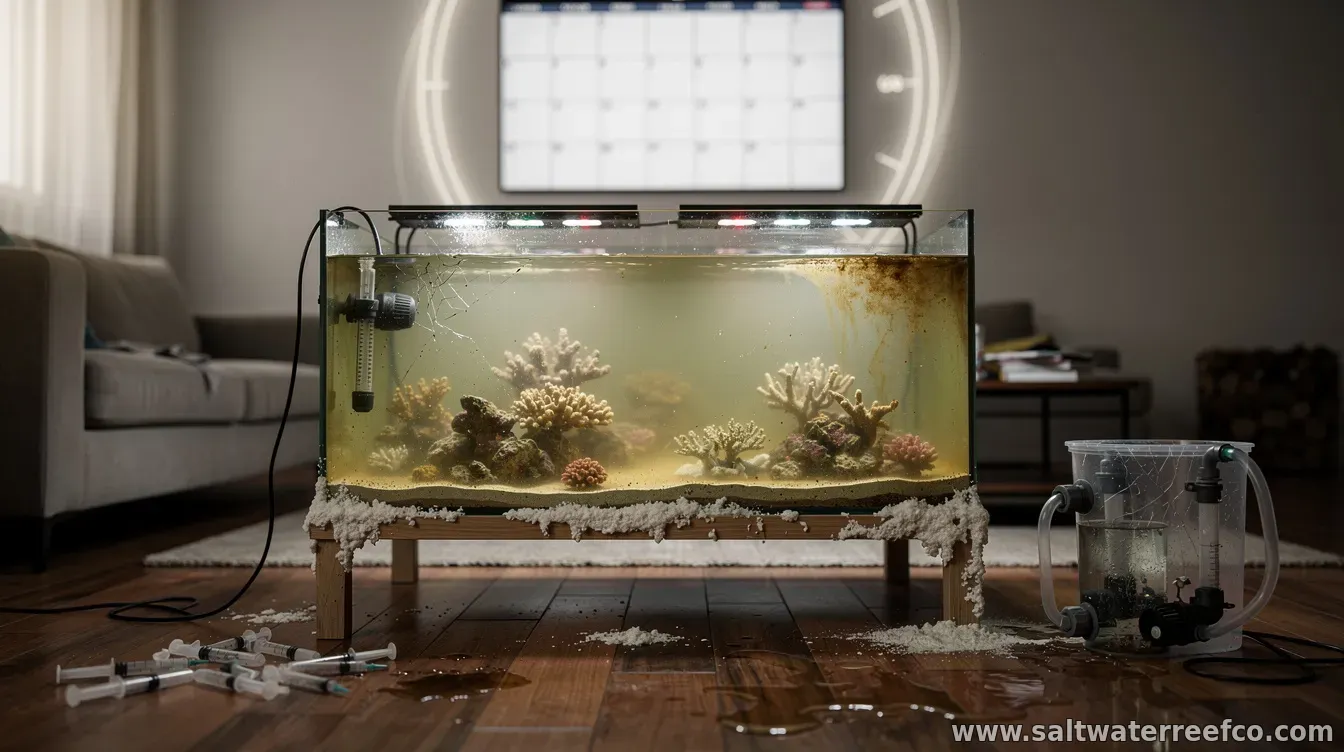
DIY reef keeping is rewarding, but many setups fail within the first 12 months—not because reef tanks are impossible, but because a few high-impact details are commonly missed. Early on, small imbalances in salinity, nutrients, or alkalinity can snowball quickly, especially in young tanks that haven’t reached biological stability. Here are the most frequent reasons DIY reef tanks stall, crash, or underperform during their first year—and what tends to fix them. 1) The tank starts “biologically unready”One of the biggest DIY pitfalls is rushing the process: adding livestock before the tank’s nitrogen cycle is mature. In practice, new tanks often struggle to convert ammonia to nitrite and then to nitrate consistently. When this conversion isn’t stable, stress and illness can appear suddenly, even if tests look “close enough.” Equally important, many DIYers rely on a limited set of test results. A tank can read “fine” for ammonia while still lacking the microbial capacity to handle waste the moment fish or corals are introduced. 2) Water chemistry swings faster than you expectReef systems depend on stable parameters, particularly alkalinity, calcium, salinity, and pH. DIY builds can experience faster swings due to evaporation changes, undersized dosing, inconsistent top-off, or reliance on infrequent manual measurement. During the first year, these swings are more harmful because the tank’s buffering capacity is still developing. The result is often gradual issues (pale corals, slowed growth) that escalate into sudden setbacks when alkalinity or salinity drifts too far. 3) Nutrients are managed incorrectly—too low or too highBoth extremes can cause trouble. Over-aggressive filtration and “scrubbing” approaches (or heavy reliance on early media changes) can starve corals and beneficial bacteria, leading to pale coloration and poor extension. On the other hand, under-managed nutrients can fuel nuisance algae, suppress coral health, and create unstable conditions in a new system. Many DIYers also change multiple variables at once—new lighting, altered feeding, updated filtration—making it hard to identify what actually corrected (or caused) the problem. 4) Livestock is added too quicklyDIY tanks often follow a “complete the build, then add everything” mindset. But corals and fish don’t just need water—they need ecosystem stability. When stocking accelerates faster than the filtration and microbial community can adapt, the tank experiences a nutrient and waste spike. That spike can show up as algae outbreaks, cyano blooms, cloudy water, or repeated losses after the tank seemed to be improving. In contrast, gradual stocking gives your system time to build resilience. 5) Maintenance routines don’t match a reef tank’s realityMost DIY failures aren’t a single catastrophe—they’re recurring small lapses. Skipped water changes, inconsistent filter cleaning (or cleaning too aggressively), missed salt-top-offs, and neglecting equipment calibration can each contribute to instability. Powerheads, heaters, pumps, and skimmers can also drift out of performance more often than beginners expect. Even good equipment can underperform if the routine is inconsistent. The first year is when habits matter most: testing schedules, saltwater preparation, and equipment checks become part of the tank’s “operating system.” 6) DIY equipment mismatches the bioloadAnother common issue is selecting hardware without fully accounting for the tank’s target bioload. A skimmer that seems powerful enough on day one may become insufficient as fish numbers rise, or as the system’s demand increases with coral feeding and growth. Similarly, return pump flow, heater capacity, flow pattern setup, and sump volume can all affect stability and oxygenation. In new tanks, these factors determine whether waste is processed smoothly or accumulates between maintenance intervals. Most successful DIY reef tanks don’t “avoid problems”—they prevent them from compounding. Start slow, measure consistently, and make changes one at a time so you can learn what your system is telling you. If your goal is long-term success, treat year one as the learning phase: stabilize the biology, then build the chemistry, then expand the livestock. That sequence is often the difference between a tank that thrives and one that crashes before its first anniversary. |
|
|
Next & Previous posts