2:47 AM Powerheads Explained: Getting Flow and Placement Right |
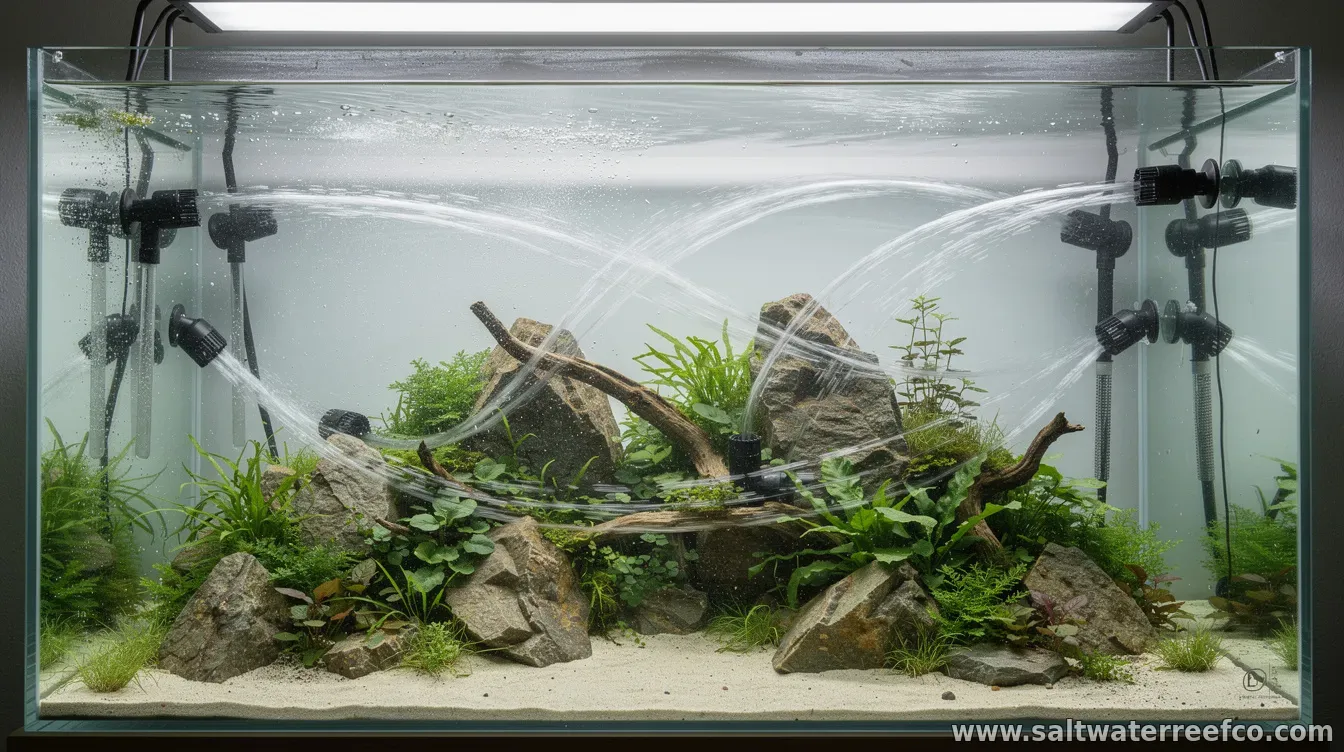
Powerheads—small, high-output water pumps used to create localized flow—are a cornerstone of many aquarium and aquatic-pond setups. When configured well, they enhance oxygen mixing, reduce stagnant zones, and help distribute nutrients and waste away from living areas. But “more flow” isn’t automatically “better flow.” The right powerhead depends on your system volume, the swimming and feeding behavior of your animals, and whether your circulation pattern eliminates dead spots without blasting sensitive species. What a powerhead actually doesUnlike a return pump that generally moves water through plumbing, a powerhead focuses flow in a targeted direction. This can increase overall mixing, keep particles suspended long enough to be filtered, and improve gas exchange at the surface and within the water column. For many tanks, the goal isn’t a constant “wind tunnel.” Instead, it’s a circulation pattern that gently sweeps water so waste doesn’t settle and nutrients don’t remain unevenly distributed. Getting the flow rate rightMost powerheads are marketed with a maximum flow figure, but that number rarely reflects real-world performance. Flow drops with distance, obstructions, and how the jet interacts with other currents. A practical approach is to choose a pump that can generate the movement you need without creating direct, high-velocity impact on animals. If your livestock shows signs of constant stress—such as hovering away from flow, retracting feeding behavior, or struggling to maintain position—your circulation is likely too aggressive in the wrong place. For placement planning, also think in terms of circulation patterns: aim for broad, indirect movement across the tank rather than relying on one narrow jet. Placement: the difference between circulation and blastsPowerhead placement determines where turbulence forms, where detritus may accumulate, and whether water moves up, down, or sideways effectively. A common mistake is mounting a powerhead so its jet hits a surface (glass, rock, or substrate) directly and continuously—this can create localized dead zones nearby and leave other areas unmoved. Instead, direct the jet so it encourages turning flow across the tank. Many setups benefit from positioning the powerhead slightly off-center and angling the output to promote cross-tank circulation, helping water travel into corners and along the substrate. If you run multiple powerheads, stagger their angles to avoid producing one dominant “lane” that only moves water back and forth in a small region. Overlapping currents can help eliminate stagnant patches, but they should remain fluid and indirect rather than colliding violently. How to spot dead spots and detritus trapsYou can evaluate flow performance without advanced tools. Observe how fine particulates (or even safe tracer-type methods, where appropriate) move after feeding or when the tank is freshly cleaned. Dead spots typically show up as areas where debris consistently gathers or where water appears still. Pay special attention to corners, behind hardscape features, under overhangs, and near the substrate line. If those areas repeatedly collect sediment, adjust the powerhead angle or height rather than simply increasing pump power.
These checks are especially important in tanks with complex aquascapes, where flow can be disrupted by rock placement and plant density. Common configuration mistakesEven experienced hobbyists can misconfigure powerheads. The most frequent issues include aiming a jet straight at animals, placing the pump too low so it stirs sand without moving debris toward filtration, or mounting it too high so it only affects the upper water layer. Another common problem is “overreliance on one pump.” Systems with varying depth, large open spaces, or heavy bioload often need additional circulation points to create a consistent pattern across the entire volume. When in doubt, make one change at a time—angle or height first—then observe for several days to confirm the flow pattern stabilizes. With thoughtful sizing and placement, powerheads turn from noisy gadgets into an essential tool for water stability. Start by targeting circulation coverage, then fine-tune the output so it supports healthy movement and keeps waste moving toward filtration instead of settling in hidden corners. |
|
|
Next & Previous posts