3:06 AM Reef-Ready vs. Standard Aquariums: Key Differences | |
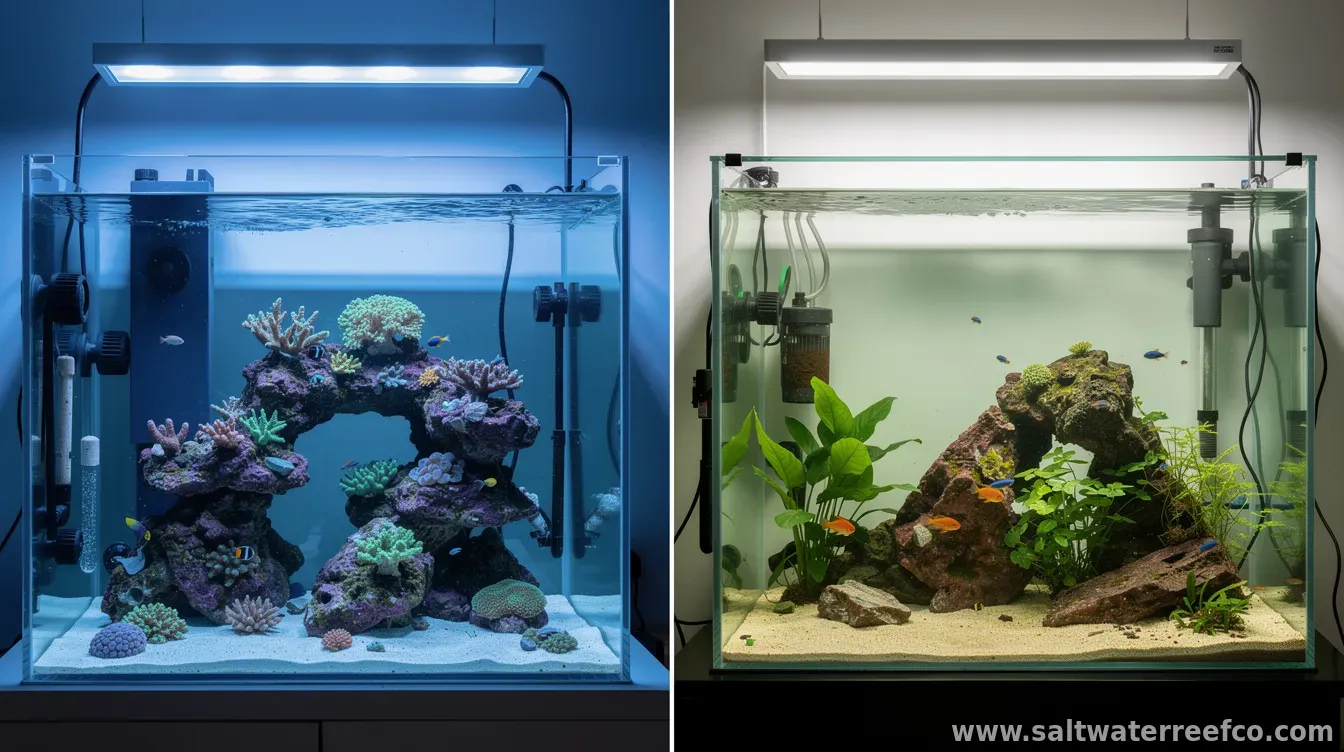
Aquarists shopping for a saltwater system often see two labels: reef-ready and standard. Both can house fish and coral, but they differ in how they’re constructed—especially around filtration plumbing and how easy they are to adapt for a reef. What “reef-ready” usually means“Reef-ready” is a market term that typically indicates the tank is manufactured with features that match popular reef filtration designs. In many cases, it includes pre-drilled or pre-planned plumbing locations and internal overflow configurations that make it easier to connect a sump, refugium, or other water-processing equipment. Because the tank is designed for these connections from the start, fewer steps are required to set up the circulation path that reef systems depend on—stable water flow, efficient filtration, and easier maintenance routines. What “standard” aquariums typically offerStandard aquariums are generally built for broad freshwater or general-purpose saltwater use, without plumbing provisions assumed for reef-specific setups. Many standard tanks are not pre-drilled for overflow plumbing, and the filtration approach may rely more on external hang-on equipment, canisters, or later custom modifications. That flexibility can be useful, but it can also mean extra work if you decide to move toward a sump-based reef system—one of the most common approaches for temperature stability, mechanical filtration, and chemical/biological media capacity. Practical differences for reef setupsFor most hobbyists, the biggest gap is installation complexity. Reef-ready tanks are commonly easier to integrate with a sump because the plumbing route is planned and (often) already drilled. Standard tanks may require additional parts, careful drilling, or a different filtration strategy to achieve similar performance. These setup differences can affect time, cost, and risk: drilling a tank after purchase introduces uncertainty and must be done correctly to avoid leaks or damage. Reef-ready designs aim to reduce that friction. Maintenance and equipment choicesBoth reef-ready and standard tanks can be maintained well, but reef-ready systems usually streamline the workflow. When overflow and plumbing are designed for sump operation, tasks like cleaning, media changes, and tuning flow can be more consistent—particularly in larger systems where sump use becomes increasingly attractive. Equipment compatibility also tends to be smoother on reef-ready builds, since many sets are sold as packages or are commonly paired with specific sump/refugium layouts. Still, the final outcome depends less on the label and more on execution: correct overflow sizing, safe and stable plumbing, appropriate filtration media, reliable temperature control, and the right level of water flow for the animals you keep. Which should you choose?If your goal is a coral-focused tank with a sump (and you want to reduce build complexity), a reef-ready aquarium is often the most straightforward path. If you’re building a saltwater fish-only system, or you’re comfortable engineering a custom setup—especially with external filtration—then a standard aquarium can still be a solid foundation. When comparing models, look beyond the branding: verify whether the tank is truly pre-drilled (and where), confirm overflow compatibility, and check the recommended stand height and sump volume. The best choice is the one that matches your intended livestock and the level of DIY effort you’re willing to take on. | |
|
| |
Next & Previous posts