0:45 AM Beginner’s Guide to Your First Saltwater Tank | |
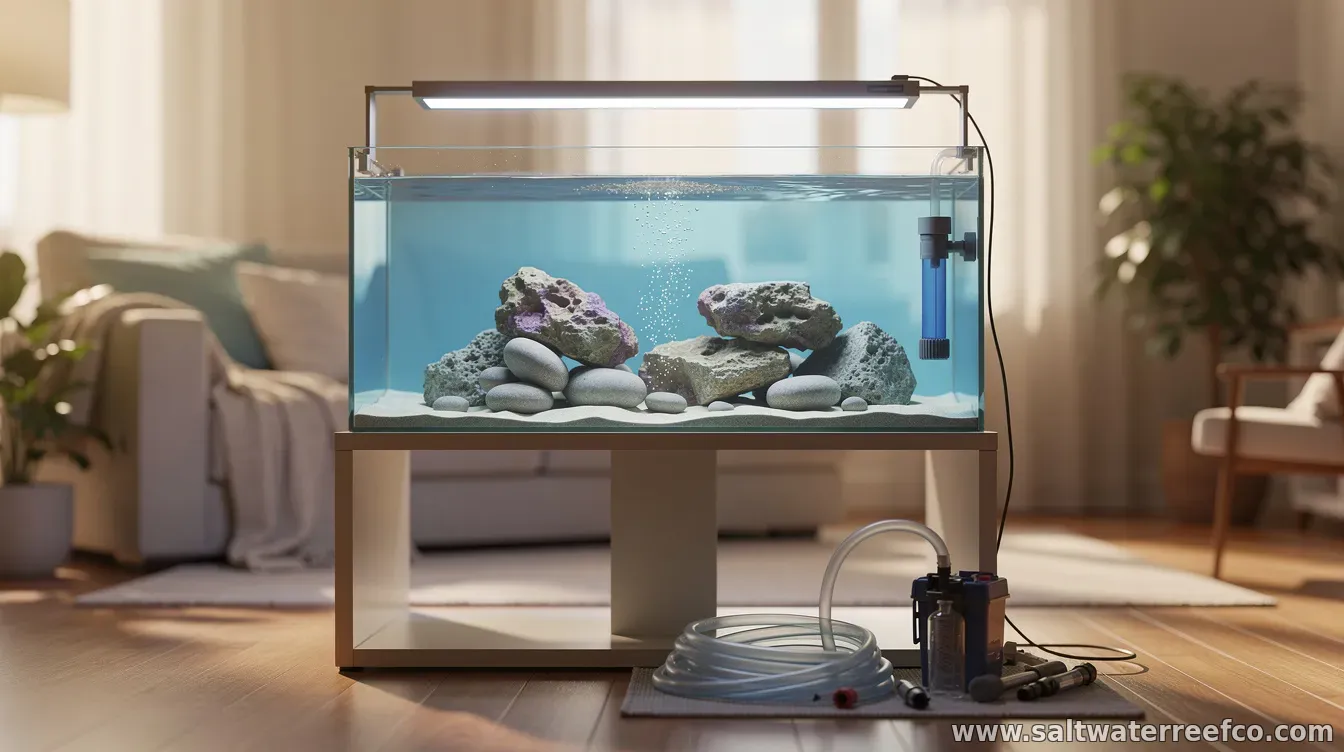
Setting up your first saltwater tank is less about rushing to add fish and more about building stable conditions. Marine systems run on delicate balances—salinity, temperature, ammonia, nitrite, and nitrate—so the right preparation can prevent most early losses. Before you buy anything, decide on a tank size that matches your budget and space. For most first-timers, a moderate tank (often 40–60 gallons / 150–225 liters) provides better water stability than very small setups, while still being manageable for maintenance. What you’ll need (starter checklist)A reliable kit usually includes a tank and stand, a marine-rated salt mix, a refractometer or hydrometer for measuring salinity, a heater (with a thermostat), and a circulation system (powerhead or return pump). You’ll also want a strong filtration approach—commonly a protein skimmer and/or a filter designed for marine use—plus a lid or top cover to reduce evaporation. Lighting matters too, but you can start with basic setups if you’re not planning demanding corals right away. Many beginners focus on fish-first or “soft coral” plans, which are more forgiving than high-light, high-demand reef builds. The most important step: cyclingOnce the tank is assembled, filled, and heated, the next phase is cycling—the process that establishes beneficial bacteria to convert toxic ammonia into less harmful compounds. During this period, you test regularly for ammonia and nitrite and confirm when they fall, ideally with nitrate showing up as a sign the cycle is underway. Resist the urge to add livestock early. Without a complete cycle, even a short delay can expose animals to dangerous water conditions. Cycling times vary, but the key is waiting until your test results show stability, not guessing by calendar. To keep parameters on track, maintain consistent temperature and salinity, and use your test kit correctly. If you top off evaporated water, add fresh (RO/DI) or dechlorinated water depending on your system—saltwater evaporates and can concentrate over time. Choosing your first inhabitantsWhen the tank is cycled and running smoothly, start with hardy choices and introduce animals gradually. A good first approach is to select fewer species at first and allow time for the biological filter to adjust. Many beginners do better with calm, compatible community picks rather than stacking multiple newcomers at once. Be mindful of tank size, swimming space, and aggression. Even friendly fish can compete, and some species grow beyond what looks appropriate at purchase. Research each animal’s adult size, temperament, and care needs before buying. Feeding and maintenance for long-term successOverfeeding is one of the most common beginner mistakes because it increases waste and can destabilize water quality. Feed small amounts, observe behavior and waste, and adjust based on consumption. It’s also normal to do water testing more frequently in the early weeks. As for maintenance, a consistent schedule helps: periodic water changes, monitoring salinity and temperature, and cleaning equipment without over-scrubbing beneficial surfaces. If you use a protein skimmer, learn how to dial it in—an underperforming skimmer can leave extra dissolved organics behind. Common beginner pitfalls to avoidSkipping the cycle, chasing numbers too aggressively, and adding too many animals too quickly are the big risks. Another frequent issue is inaccurate salinity measurement—make sure your tool is appropriate and your calibration habits are consistent. Also, don’t treat “saltwater” as one fixed recipe. Your salt mix, water source quality, and top-off method all influence results. If you’re unsure, start with a simpler plan (fish-first, fewer species) and scale up once your routine is stable. With the right gear, careful cycling, and conservative stocking, your first saltwater tank can become a rewarding long-term hobby. Take your time, test often at the start, and prioritize stability over speed. | |
|
| |
Next & Previous posts