2:23 AM Leaving a Reef Unattended for a Week: A Safe Plan |
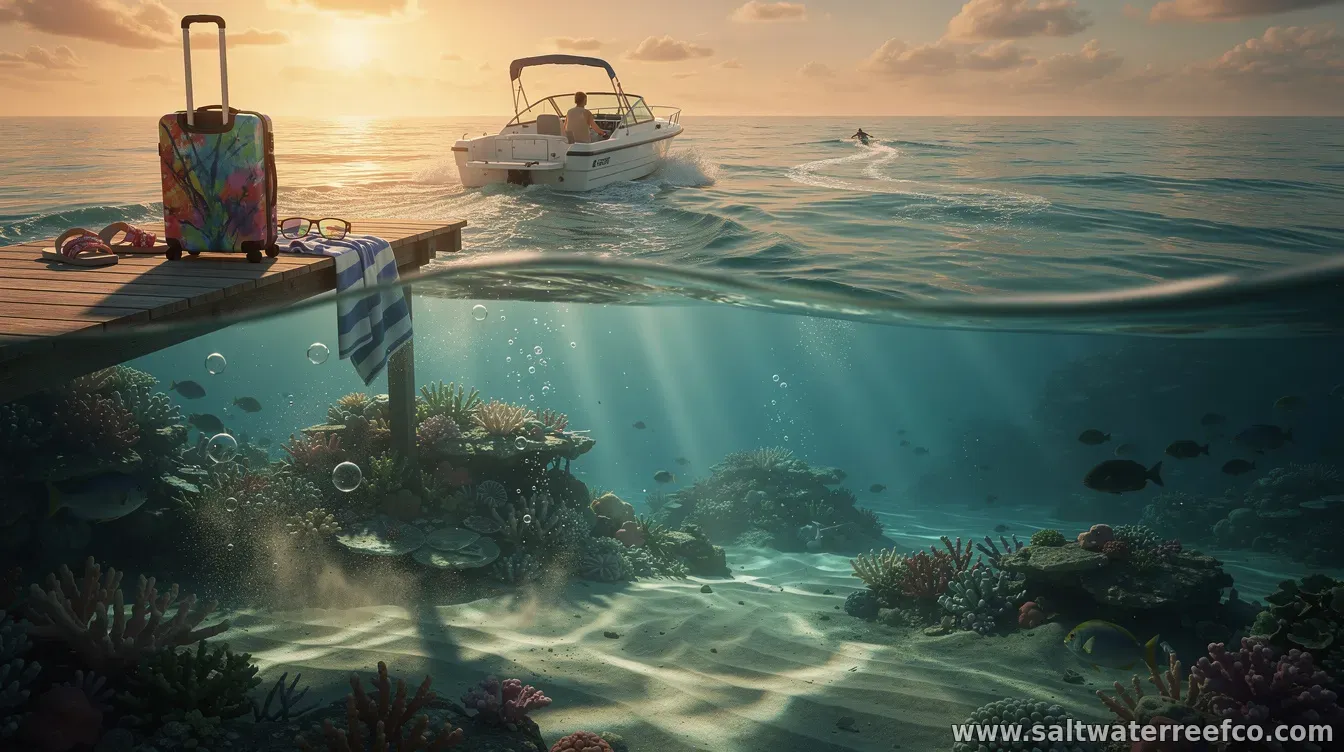
Going on vacation is stressful enough—without worrying that your reef will deteriorate while you’re away. Whether you run a home saltwater aquarium or a professional reef system, the biggest risks during a one-week absence are temperature swings, loss of filtration/flow, unstable salinity, and over- or under-feeding. Below is a reef-focused checklist designed to reduce “system shock” and keep key water-chemistry parameters within safe ranges. The goal isn’t perfection; it’s building redundancy so your animals aren’t left to fail on their own. Start with stability: check everything before you leaveIn the days leading up to travel, treat the tank like it’s going to be stress-tested. Confirm that your heaters and/or chiller are reliable, verify saltwater top-off is working, and ensure power outages won’t immediately become a catastrophe. A week is long enough for small issues—like a clogged return line or a weak pump—to compound quickly. If possible, test-run your setup for at least a full day with normal lighting and feeding routines. Inspect wave-makers for stuck impellers, verify skimmer performance, and confirm that filter media and mechanical components are clean but not over-disturbed. For many systems, “everything running smoothly” is less important than “everything running predictably.” Use automation carefully: feeding and flow should be controlledMost reef failures while owners are away trace back to feeding miscalculations and flow disruptions. Instead of guessing, consider timed or portioned feeding designed for vacation conditions. Many aquarists opt for low-risk “vacation mode” options—such as scheduled small feedings—rather than a single large dump that can spike nutrients. For flow, ensure pumps are fully operational and that the return path is clear. If you’re using devices that require calibration (dose pumps, controllers, autocleaning systems), confirm they are set correctly and leave enough buffer supplies on-site. Back up the critical systems (and plan for contingencies)Temperature control is non-negotiable. If your system relies on a heater, verify wattage and placement; if it relies on multiple devices, confirm both are functional. Consider a battery backup for controllers and, when feasible, for circulation pumps so the tank keeps moving even during short outages. Water quality monitoring helps you catch problems early. If you can, use an aquarium controller that alerts you to parameter changes (and confirm you’ll have internet access). Even with automation, plan a fallback: who can respond if alarms trigger, and what actions can they safely take? Prepare the household: a “guest caretaker” planEven with automation, it’s wise to brief a trusted person for emergencies. Provide written instructions covering what to check, what not to change, and how to recognize warning signs. Keep it simple: power status, temperature display, and whether any pump has stopped are often more actionable than advanced chemistry troubleshooting. If a caretaker will feed, pre-measure portions and label schedules. Avoid making them troubleshoot complex dosing on the fly—especially for systems that run additives or kalkwasser/alkalinity strategies. Adjust expectations: reduce feeding and nutrient swingsFor a one-week absence, the safest approach is typically to reduce feeding slightly compared with normal routine rather than increasing it. Nutrient spikes can fuel algae blooms and stress corals; under-feeding can be less immediately destructive but still impacts tissue health over time. The best compromise is usually modest, scheduled feeding that won’t overwhelm biological filtration. Also be mindful of lighting. If you have a controller, confirm the schedule remains consistent. Sudden changes in photoperiod can add stress—especially for light-dependent corals. What “success” looks like during the weekA well-prepared vacation plan should keep your reef within stable operating conditions: steady temperature, continuous flow, functioning filtration, and feeding that doesn’t cause nutrient spikes. If you can monitor remotely, you can confirm things are on track; if you can’t, your pre-trip redundancy matters even more. Before you lock the door, re-check that your supplies are sufficient and that your alarm/alert system (if you have one) will notify you. Vacation is time to rest—not to scramble for last-minute hardware or chemical fixes. Bottom line: Don’t aim to “leave it and hope.” Aim to “leave it and know.” With checked equipment, controlled feeding, temperature redundancy, and clear contingency instructions, a week away can be manageable for many reef systems—and safer for the animals that depend on you. |
|
|
Next & Previous posts