0:46 AM Understanding ICP Testing: What the Numbers Actually Mean |
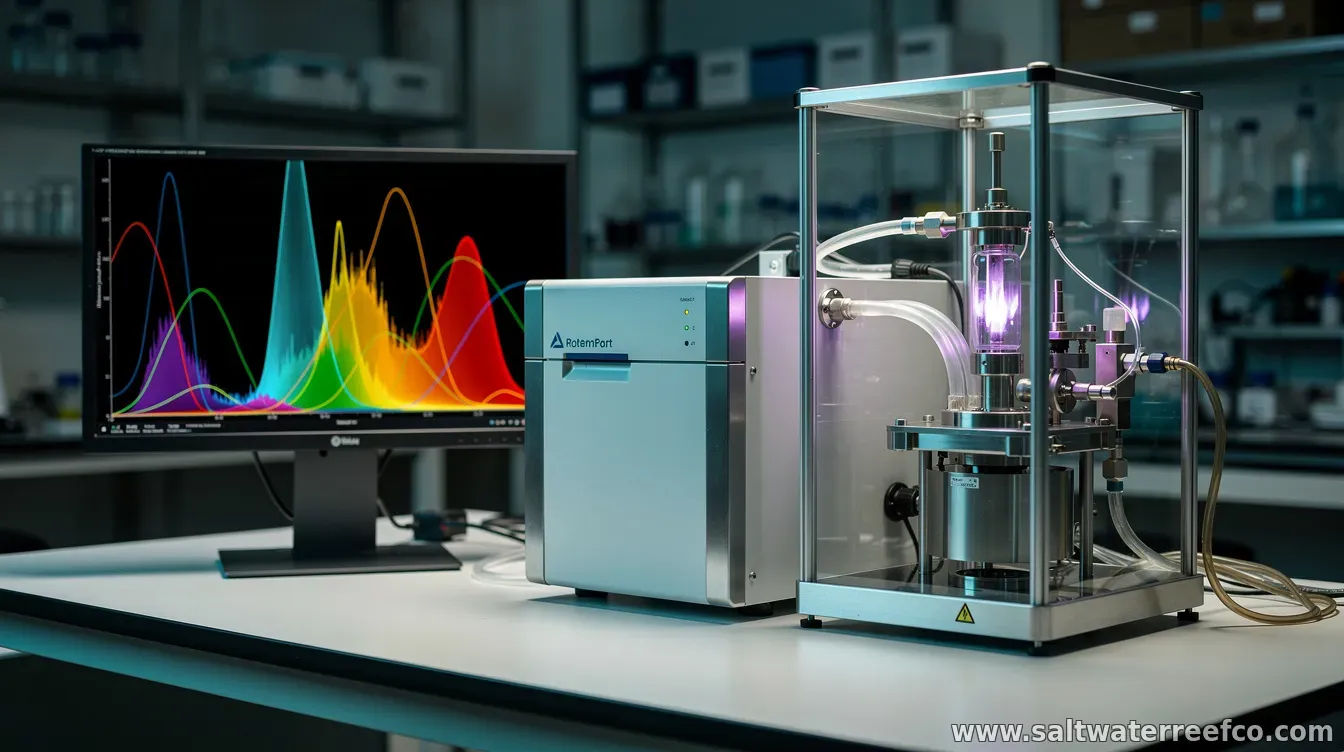
ICP testing—most often referring to ICP-MS (inductively coupled plasma mass spectrometry) and ICP-OES (optical emission spectrometry)—is widely used to quantify metals and other elemental constituents in water, soil, industrial process streams, and many other sample types. While the instrument can produce precise-looking numbers, the real value of ICP results depends on how those numbers were generated and what the reported metrics mean. At a high level, ICP testing reports how much of an element is present in your sample. But “how much” is not just one number on a report: you need to consider the units, whether a value is detected or estimated, the method detection limit, and whether the result reflects the sample preparation and dilution strategy. 1) Units tell you what the value refers toICP reports commonly use units such as mg/L (milligrams per liter) for liquids or µg/L (micrograms per liter) for very low concentrations. For solids, you may see mg/kg or µg/kg. A frequent source of confusion is comparing results expressed in different unit systems or failing to account for any dilutions applied before measurement. Always check whether the laboratory reports results for the original sample or for the prepared/diluted aliquot. If the sample was diluted (for example, to bring it into the calibration range), the lab should mathematically correct back to the original concentration—yet miscommunication can occur if you compare files from different methods or revisions. 2) “Detected,” “Not detected,” and “Below detection limit” are differentMost ICP reports include qualifiers indicating whether an element was measured above the instrument or method detection limit. Values marked as “not detected” or “below detection limit” do not necessarily mean the element is absent—they mean it was not reliably distinguishable from background noise under the method’s sensitivity. Some labs provide an estimated concentration when results are near the detection limit. In those cases, the number may be flagged (for example, with an “J”-type qualifier in certain reporting conventions), signaling lower confidence. For decision-making—such as compliance checks, environmental assessments, or process troubleshooting—knowing the qualifier matters as much as the magnitude. 3) Calibration range and dilutions affect whether the number is trustworthyICP instruments quantify elements by comparing measured signals to a calibration curve. If a sample’s concentration falls outside the calibration range, the lab may require dilution, re-analysis, or a different method. When you see unusually high or tightly clustered results across elements, it can sometimes reflect calibration behavior, interferences, or dilution choices rather than a single chemical story. Look for notes on re-dilution, method changes, or instrument re-runs. Those operational details often explain why a later report differs from an earlier one even if the sampling event was the same. 4) Detection limits and reporting limits aren’t the same thing everywhereLabs use terms like method detection limit (MDL) or limit of quantitation (LOQ). MDL typically indicates the lowest concentration that can be detected, while LOQ indicates the lowest concentration that can be quantified with acceptable accuracy and precision. When you compare reports from different laboratories, be cautious: detection limits can vary based on sample size, digestion/dissolution procedure, instrument settings, and analysis conditions. A value that appears “low” in one lab’s units and sensitivity may not be directly comparable to another lab’s “low,” especially when decisions hinge on thresholds. 5) Matrix effects and sample prep can change the numbersICP works best when the sample matrix—its salts, acidity, organics, particulates, and other coexisting compounds—does not distort the measurement. In practice, matrices can introduce spectral interferences (overlapping spectral lines), chemical interferences (differences in aerosol formation or ionization), or incomplete extraction. For solids and many complex water samples, sample preparation is often the largest determinant of result quality. Digestions (such as acid digestion) and filtration steps can change what fraction of an element becomes measurable. If your question is “How much is present in the material?” while the method only measures the lab-extractable fraction, the reported number may not answer your exact question. Common pitfalls when interpreting ICP numbers
If you’re using ICP results for compliance, risk assessment, or engineering decisions, ask for the lab’s method description, detection/quantitation limits, and any quality control documentation (blanks, calibration checks, duplicates). Those details help you interpret whether a small change is meaningful or simply within the method’s expected variation. In many real-world cases, the “story” behind ICP testing emerges when you interpret the numbers alongside how samples were collected, prepared, and analyzed. With that context, ICP reports become far more than a table of concentrations—they become evidence you can act on. |
|
|
Next & Previous posts