3:04 AM Coral-Specific Pests: Nudibranchs, Acropora Crabs, and Copepods | |
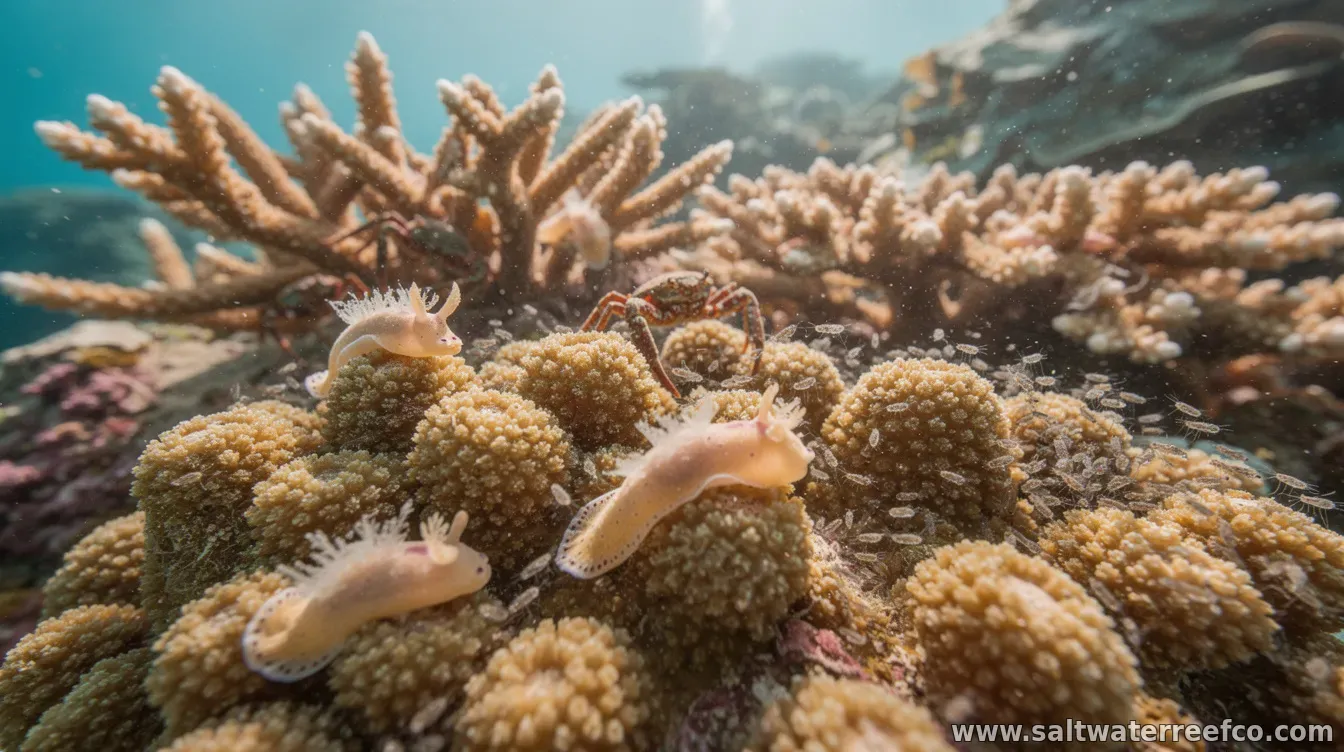
Coral declines in reef aquariums and natural systems are often blamed on broad threats such as water quality and temperature swings. But some of the most damaging problems come from organisms that specialize in particular hosts—meaning certain corals attract specific pests that can quickly turn into a persistent, colony-level problem. Montipora-eating nudibranchs and targeted tissue lossAmong the most notorious host specialists are Montipora-eating nudibranchs. These sea slugs are adapted to locate and feed on Montipora tissues, leaving characteristic feeding scars and, over time, exposed skeletal patches. Because they can be small and hard to spot during routine checks, early signs may be mistaken for minor stress until tissue loss becomes obvious. In affected colonies, caretakers typically notice paling tissue, peeling areas, or irregular receding edges. The situation can worsen if multiple individuals are present, especially in systems where Montipora fragments or related pieces are moved between tanks without thorough inspection. Acropora crabs: small feeders with outsized impactAnother host-associated group is Acropora crabs. While not all crabs associated with Acropora are harmful, some species are reported to feed on coral tissue or disturb polyps, leaving behind patchy damage that can spread across colony branches. Damage patterns may appear as localized paling, thinning, or missing polyps along specific areas rather than uniform paling across the whole coral. Crabs can also hide in crevices or within the coral structure, complicating removal efforts. When infestations are suspected, careful observation during feeding times and targeted inspection of the colony’s base and branches can help narrow down the cause—particularly if damage tracks the same coral individual over time. Parasitic copepods and longer-term stressParasitic copepods are smaller still, but they can create problems that look subtle at first. These microscopic crustaceans can attach to coral tissue and contribute to ongoing stress, which may show up as reduced extension, slowed growth, or localized irritation that later becomes visible as tissue quality declines. Because copepods are hard to detect without magnification, symptoms can resemble other stressors such as nutrient imbalance or low-flow irritation. The key difference is often persistence: if the same coral continues to deteriorate while surrounding colonies remain stable, host-specific parasitism becomes a more likely explanation. How reef keepers and researchers respondAcross both reef keeping and scientific monitoring, the most effective response starts with early detection and coral-by-coral assessment. Instead of treating “coral pests” as one category, observers look for patterns—such as damage matching the host’s known vulnerabilities—and then verify by inspection. When action is needed, strategies typically include quarantine of new coral fragments, visual and magnified checks of suspect colonies, and careful removal of visible pests where feasible. In some cases, targeted interventions may be used in controlled settings, but the most reliable approach is preventing pest introduction and reducing conditions that allow fast population growth. As more reef hobbyists share host-specific observations, coral specialists are increasingly recognized not just as random invaders, but as predictable problems tied to particular coral species. Understanding which pests target Montipora, Acropora, or coral tissues more broadly can make diagnosis faster—and help preserve colonies before damage becomes irreversible. | |
|
| |
Next & Previous posts