0:24 AM Saltwater Fish Compatibility: Who Gets Along Best |
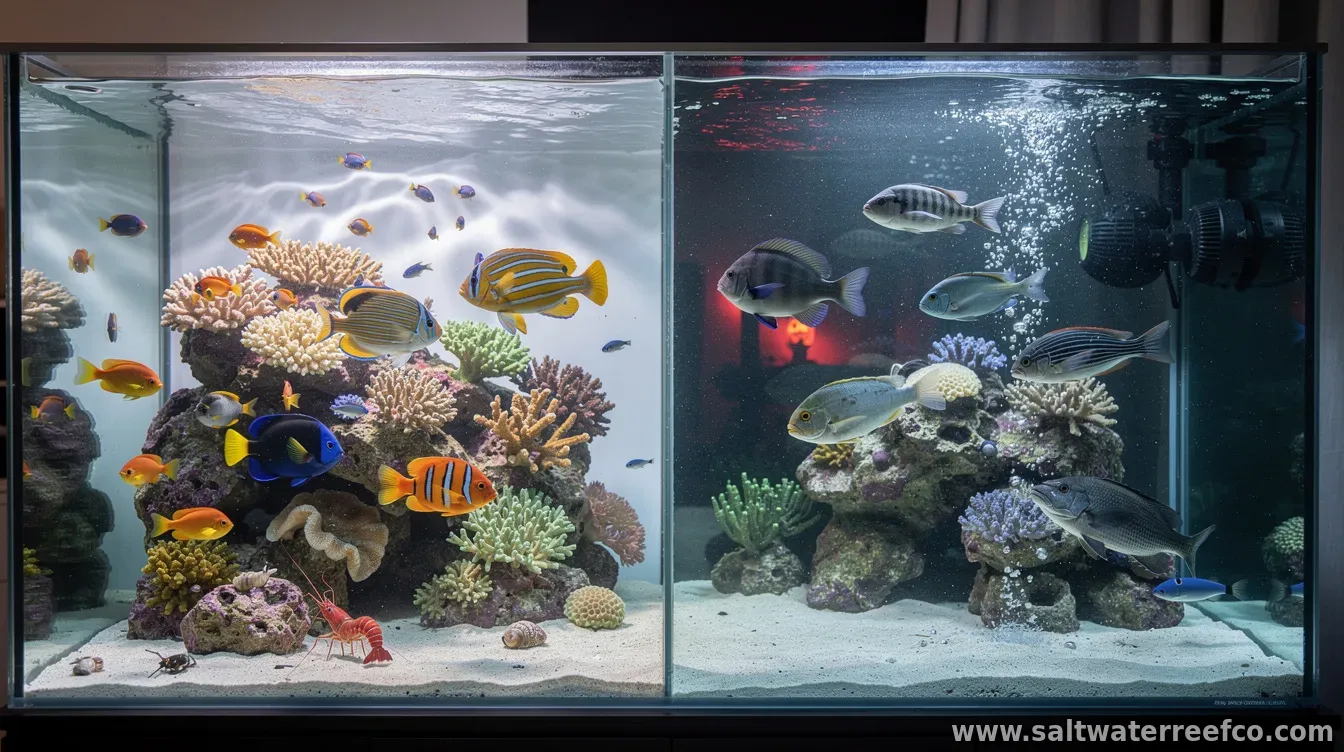
Building a saltwater community tank is as much about compatibility as it is about water quality. Even with perfect parameters, fish that fight for territory, compete for the same food, or prey on smaller tankmates can turn a healthy aquarium into a stress—and injury—risk. Because every aquarium and individual fish can behave differently, treat this compatibility chart as a starting point: match species by temperament, adult size, and ecological niche (rock-dwelling, midwater, or bottom), and plan for how new additions will change the system. General rules that determine compatibilityMost successful pairings follow a few repeatable principles. Avoid mixing fish with opposing temperaments or mismatched social needs, and don’t rely on “they’re peaceful at the store” as a predictor—behavior often changes as fish mature or establish territory. Key compatibility factors: adult size (and how quickly it grows), aggressiveness (territorial versus schooling), feeding strategy (predator versus grazer versus planktivore), and habitat (open swimmer versus reef crevice user). Common “generally compatible” pairingsIn many community setups, certain groups reliably coexist when introduced thoughtfully and with enough space. These pairings still require caution, but they are commonly managed in the aquarium hobby.
For these “generally compatible” categories, the biggest success driver is avoiding overcrowding and providing plenty of structure (live rock, caves, and swimming routes) so subordinate fish aren’t forced into constant contact. Who tends to clash (and why)Some fish are more likely to cause trouble because they’re territorial, highly active, or naturally predatory. Conflicts can range from chronic chasing to fin damage, hiding, or outright predation.
If you’re planning to keep both active swimmers and reef dwellers, create clear boundaries—multiple “zones” of rockwork and open water can reduce constant face-to-face competition. How to apply a “compatibility chart” in real stockingA compatibility chart helps you think in categories, but your ordering, tank size, and rock layout often decide whether the plan works. Use this approach when adding fish.
For the highest odds of success, research each species’ adult temperament and habitat niche. Then verify whether the commonly reported compatibility holds for the specific tank conditions—especially volume, filtration, and the number of competing fish. Finally, plan for long-term changes. A fish that starts “community-friendly” can become territorial after it matures. The best stocking strategies assume growth and evolving behavior, not just the first few weeks in a new aquarium. If you want, share your tank size (liters/gallons), current inhabitants, and what you’re considering adding. I can help translate that into a more specific compatibility plan tailored to your exact community. |
|
|
Next & Previous posts