0:56 AM Coral disease, RTN & STN, and bleaching: diagnosis and response |
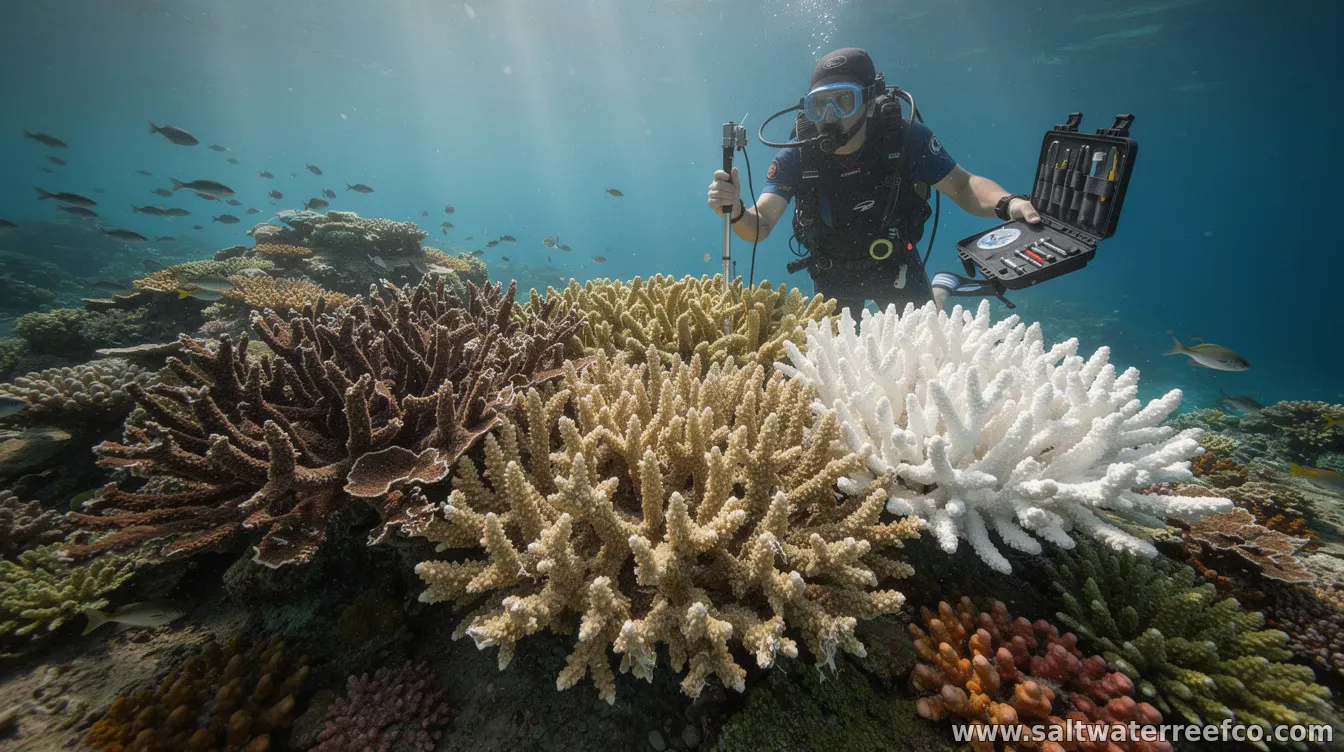
Coral reefs are facing multiple, sometimes overlapping threats. In addition to warming-driven bleaching, reefs can experience infectious coral diseases that spread rapidly across colonies. Two well-known categories of disease—rapid tissue necrosis (RTN) and slow tissue necrosis (STN)—can be difficult to distinguish from each other and from non-disease stressors without careful field observation. While local causes and species vary, patterns of change in tissue color, lesion shape, and progression over hours to days usually guide diagnosis. Response strategies similarly focus on limiting spread, reducing stress, and documenting impacts so resources can be prioritized. What RTN looks likeRapid tissue necrosis (RTN) is characterized by a swift loss of living coral tissue. During an RTN event, observers often note a sudden shift from healthy tissue to bare skeleton, with the boundary between healthy and affected tissue advancing quickly. The affected area may appear as a darkened or pale strip where tissue has peeled or disappeared, leaving an exposed substrate. RTN can be especially concerning because of its speed: colonies may deteriorate over relatively short periods, and adjacent colonies can become at risk depending on local conditions. Accurate identification often requires consistent observation of lesion margins and progression rather than relying on color alone. How STN differsSlow tissue necrosis (STN) involves tissue loss that develops more gradually than RTN. Instead of an abrupt wipeout, STN typically shows a less dramatic pace—necrosis may expand over longer intervals while still resulting in exposed skeleton and loss of living tissue. Because both RTN and STN produce similar end states (dead skeleton where tissue used to be), the practical distinction for responders is usually the rate of change and the consistency of lesion expansion. Detailed field logs—timestamps, affected surface area estimates, and photo series—help teams and partners evaluate whether the pattern matches RTN, STN, or another stress-related outcome. Bleaching: a different mechanism, a similar outcomeBleaching occurs when corals expel their symbiotic algae (zooxanthellae) under thermal stress or other major stressors such as prolonged high light or changes in water quality. Bleached corals may appear white, pale, or washed-out, but the tissue is not necessarily dead at the time of observation. This distinction matters for response. Bleaching reflects stress physiology and can be reversible if conditions improve quickly. In contrast, RTN and STN are framed as disease processes involving progressive tissue loss. However, stressed corals—whether from heat or other factors—can be more susceptible to opportunistic pathogens, meaning a bleaching event can increase vulnerability to disease. Field diagnosis: what responders typically checkIn practice, diagnosing coral conditions is usually an observational process supported by monitoring data. Teams typically focus on:
Because conditions can vary by species and site, teams often use standardized survey methods and photo documentation to reduce misclassification and to compare results with past events. Response strategies: containment, reduction of stress, and recovery supportEffective response generally starts with rapid assessment. When RTN or STN is suspected, teams prioritize mapping affected colonies, estimating affected area, and identifying nearby healthy colonies that may be at risk. In many settings, management actions may include reducing local stressors (such as sedimentation and pollution inputs), limiting physical disturbance, and coordinating dive or boat access rules to prevent unnecessary contact. For suspected bleaching, the emphasis shifts toward stress mitigation and recovery conditions. Actions can include protecting reefs from additional stressors while environmental conditions normalize. Managers may also align with broader thermal monitoring, as bleaching intensity often correlates with heat exposure and recovery windows. Across both disease and bleaching scenarios, long-term recovery planning typically includes continued monitoring, updating maps and severity scores, and using findings to refine site management. In some regions, restoration efforts—like coral gardening or propagation—are considered after the immediate crisis, especially where feasible and environmentally appropriate. Why monitoring and documentation are decisiveCoral decline is rarely caused by a single factor. Temperature anomalies, water quality changes, disease outbreaks, and other stressors can overlap, and misidentification can lead to mismatched interventions. Systematic data—consistent transects, standardized lesion scoring, and time-stamped photographs—supports better decision-making and helps researchers and local managers compare events across seasons. For communities and reef managers, the practical goal is to detect changes early, communicate risk clearly, and focus efforts where they can most improve survival chances for corals and the reef ecosystem as a whole. As heat extremes become more frequent, integrating disease surveillance (including RTN and STN), bleaching monitoring, and stress reduction at the local level can help reefs withstand recurring shocks—and provide clearer pathways for recovery. |
|
|
Next & Previous posts