1:05 AM Saltwater Fish Compatibility: Who Gets Along and Who Doesn’t | |
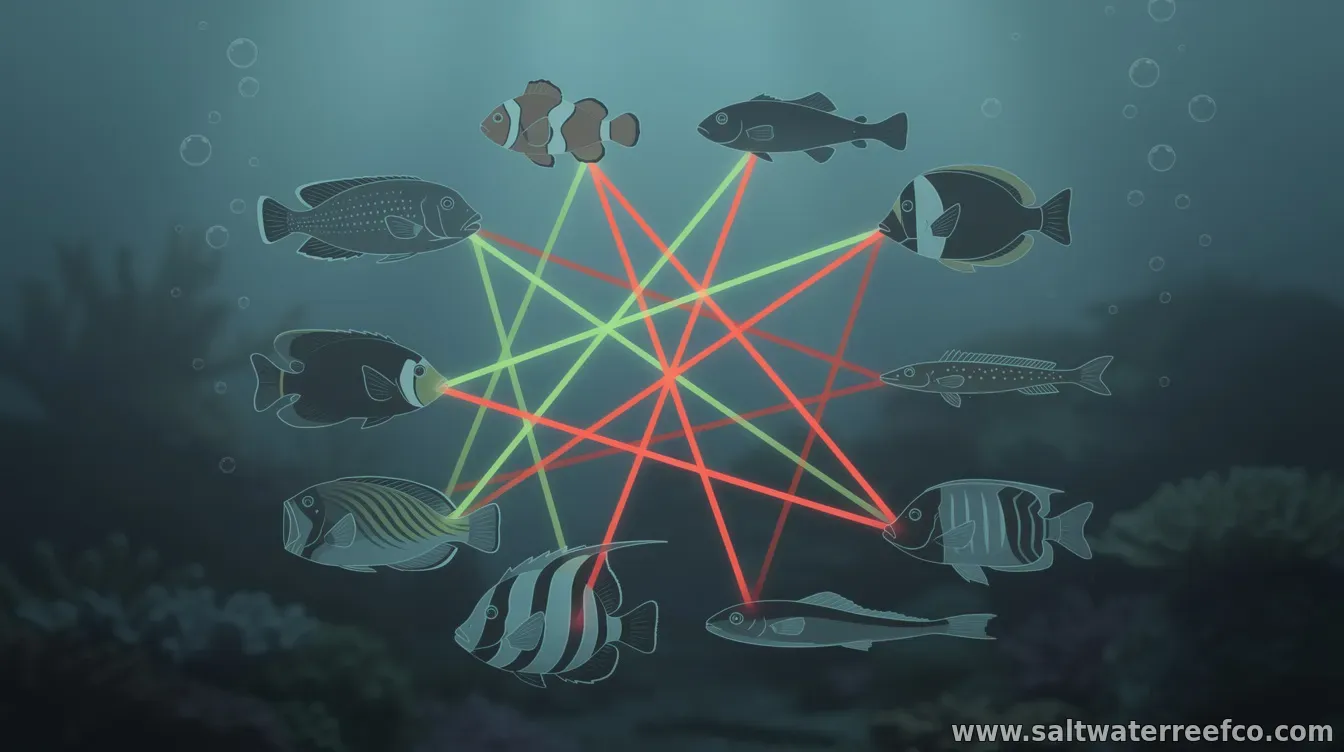
Adding fish to a saltwater tank isn’t just about looks—compatibility largely determines whether your aquarium becomes a stable community or a cycle of chasing and injury. Even “reef-safe” labels don’t guarantee peaceful behavior; many species differ in aggression levels as they mature. Experts generally focus on four compatibility drivers: temperament (how likely a fish is to bully), tank dynamics (how much space there is and how many hiding spots exist), feeding (who competes at mealtime), and behavioral mismatch (for example, predator vs. small prey, or territory defenders vs. constant intruders). Among the most reliable community builders are many small “social” species that don’t aggressively claim territory. For instance, some cardinals and many chromis-type fish can work well with other similarly scaled, non-territorial schooling species—provided the tank is large enough and there’s appropriate cover. In contrast, several groups frequently cause problems in mixed communities. Predatory or semi-predatory fish may ignore your intentions and treat smaller tankmates as food, while species known for defending a patch of reef-like space often harass newcomers that enter “their” area. Pairings that often work (with common-sense conditions)Many aquarists have the best results when they pair fish with similar aggression levels and avoid mixing species that occupy the same niche in different ways. Community-friendly combinations typically include pairing small, peaceful fish together and adding them in an order that reduces territorial shock.
Condition matters: even “compatible” species can become hostile if the tank is crowded, if hiding spaces are limited, or if one fish monopolizes food. Pairings that often don’tFish that defend territory, grow quickly in a confined space, or naturally hunt smaller animals are common sources of conflict. The most frequent issues include rapid chasing, fin nipping, sustained stress, and in extreme cases, injury.
As a rule of thumb, if two species are both known to be assertive and occupy similar parts of the tank, compatibility depends on space and job separation—and it can still go wrong. Practical tips for safer introductionsCompatibility planning starts before purchase. Start by researching adult size, temperament, and typical behavior in community setups—not just how a fish looks in a store tank. Then design the aquarium so fish can establish boundaries without constant confrontation.
When aggression appears, intervene early: increase feeding opportunities, rearrange flow/rockwork (carefully and with a plan), or consider separating problem individuals before injuries occur. Because every tank is different, a “who gets along” chart should be treated as a starting point—not a guarantee. The safest approach is to match temperament and adult size, introduce thoughtfully, and build a layout that allows each fish to keep comfortable boundaries. | |
|
| |
Next & Previous posts