1:37 AM How to Move a Saltwater Aquarium Without Losing Everything | |
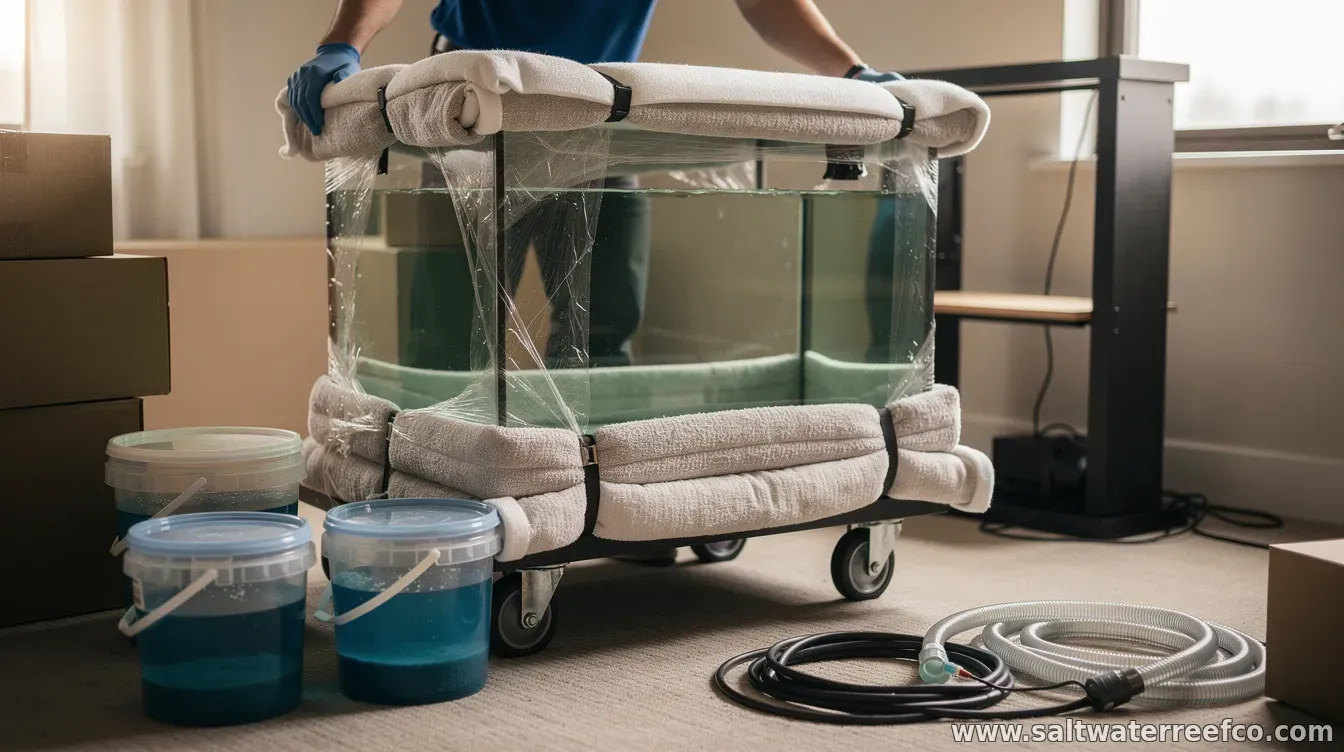
Moving a saltwater aquarium without losing everything comes down to one principle: protect the living system that makes your tank work. That system isn’t just the fish and corals—it’s also the beneficial bacteria living in your filter media and rock, plus the delicate balance of temperature, salinity, oxygen, and cleanliness. Before you move, plan the timeline and gather supplies so you’re not rushing on moving day. The longer livestock and filter media are out of their stable environment, the more likely you’ll see ammonia spikes, temperature swings, or oxygen stress. 1) Plan your move like a “water change,” not a relocateConfirm practical details first: where the new stand will sit (level, stable, near your power sources), how you’ll handle the tank’s weight, and whether you need extra help. If possible, move the tank itself to the new location before moving livestock—then you can focus on setting up water conditions quickly. Build a checklist of what you’ll need on hand: pre-mixed saltwater at the correct salinity, clean buckets/food-grade totes, an aquarium thermometer, a refractometer or hydrometer, a heater and thermometer (if temperatures will change), and enough containers to separate delicate animals. 2) Preserve the biological filter (this prevents ammonia disasters)Your biggest risk during a move is not just temperature or stress—it’s losing beneficial bacteria. The fastest way to protect them is to keep filter media and live rock wet and oxygenated, and to move them as little as possible. When you pack: avoid “dry time” for live rock and porous biological media. Keep them in sealed, temperature-stable containers filled with tank water (not fresh tap water). If the move is longer, you may need to run gentle aeration/oxygenation during transport—especially for porous materials. 3) Prepare water and keep parameters stableOn the new side, the goal is to restore the tank’s conditions quickly. Mix new saltwater in advance and let it reach the same temperature as the display tank. Match salinity and temperature closely using your testing tools—eye-balling or “close enough” often leads to shock. During transfer, use existing tank water for as much as possible. Save enough original water to cover livestock transport needs and to refill the system immediately. Fresh saltwater can be added once the tank is stable, but delaying parameter correction is a common failure point. 4) Transport livestock fast and protect oxygenFish and invertebrates should be moved last and returned first. Use properly sized containers—smaller containers generally require more frequent oxygenation. Use battery-powered aerators if you have long transport time, and keep containers insulated to reduce temperature drift. Try to minimize handling and avoid leaving bags or tubs in direct sun or a hot trunk. For sensitive corals, keep lighting and temperature stress in mind: transport them in stable, temperature-controlled conditions and limit time out of water as much as practical. Practical order of operations (typical):
5) Reassemble quickly, then “restart” with monitoringOnce the tank is placed and level, refill promptly with the stored tank water and prepared saltwater. Reinstall live rock, filter media, heaters, and powerheads. Confirm temperature and ensure flow is working before fully returning animals. After the move, assume the tank may temporarily be unstable. For safety, test more frequently than usual for at least the first several days: ammonia, nitrite, nitrate, and pH. If ammonia or nitrite appears, don’t wait—respond immediately with appropriate emergency steps (for example, increasing aeration and using water-quality measures suitable for saltwater systems). Be prepared to do smaller, controlled adjustments rather than big “catch-up” changes. Large swings in salinity or pH can be as harmful as a temporary spike of waste products. 6) Common mistakes that lead to total lossesEven experienced aquarists lose animals when one of these happens: biological filtration is allowed to dry or is replaced with fresh media at the wrong time; temperature changes are significant; saltwater isn’t pre-mixed to matching salinity; oxygenation is ignored during transport; or the tank is left empty/untended longer than necessary. Also, many people underestimate time. Build slack into your plan so you can move steadily rather than rushing at the end. If you’d like, tell me your tank size, how long the move will take, whether you’re transporting live rock and what equipment you have (filter type, heaters, aeration). I can help you tailor a step-by-step schedule and a “how much water to store” plan. | |
|
| |
Next & Previous posts