5:07 AM What to Do When a Fish Dies in a Reef Tank |
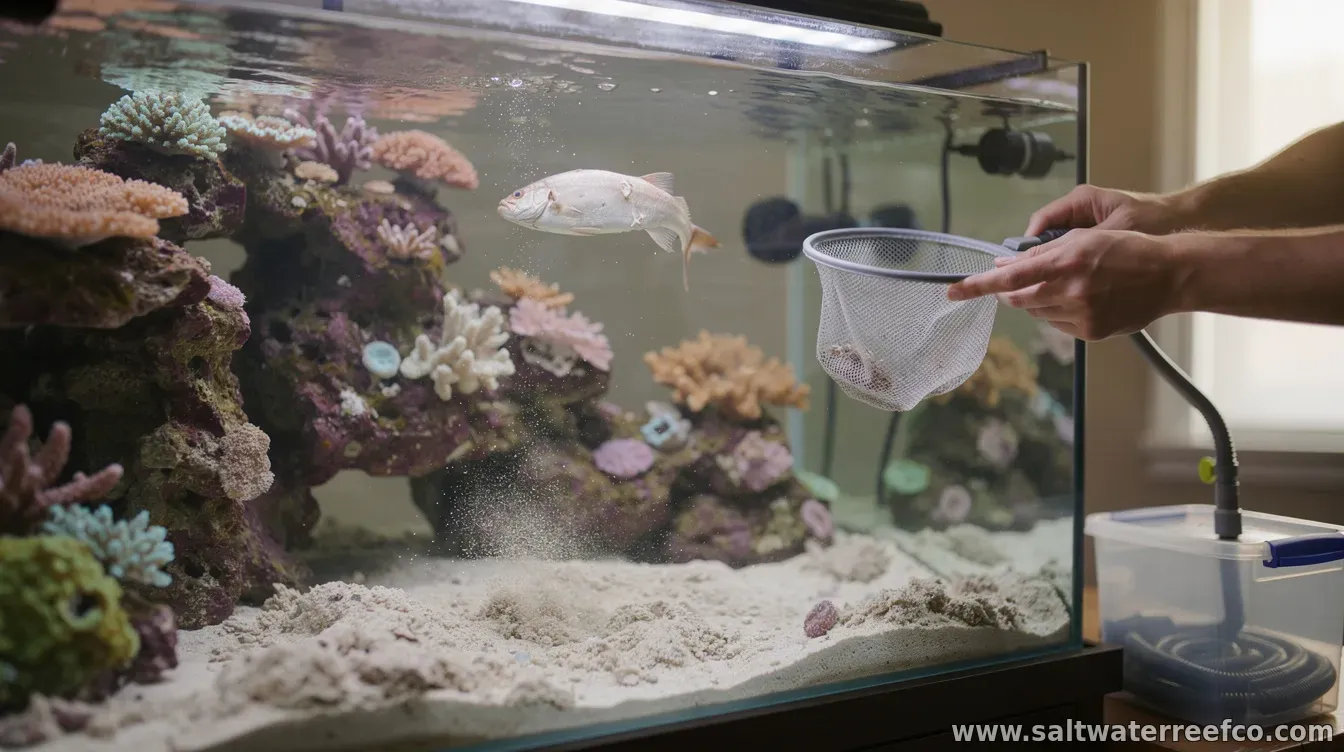
Discovering a fish dead in a reef tank can feel alarming, especially because reef systems can change quickly when organic waste breaks down. The goal is simple: remove the source of decay, prevent ammonia and oxygen stress, and figure out what likely caused the death so it doesn’t happen again. 1) Remove the fish promptly Use a net or container to remove the dead fish as soon as you notice it. Leaving it in the tank can raise ammonia and lower oxygen, increasing the risk of additional losses—particularly in smaller or heavily stocked systems. 2) Check water quality immediately Within the same day (or as soon as possible), test for the most relevant parameters: ammonia (NH3/NH4), nitrite, nitrate, and pH. Also observe temperature and ensure normal flow and aeration are maintained. If ammonia or nitrite is present, treat the tank as an urgent stability issue. 3) Adjust filtration and consider a water change Ensure mechanical filtration is working and not clogged. If your tests show elevated ammonia/nitrite, or if parameters are trending off, perform a timely water change (size depending on results and tank stability) to dilute harmful compounds. Match salinity and temperature to reduce additional stress. 4) Reduce further stress and watch the rest of the tank Keep lighting, feeding, and handling consistent—avoid dramatic changes while you troubleshoot. Monitor the remaining fish closely for labored breathing, flashing, discoloration, sores, or loss of appetite over the next 24–72 hours. If multiple fish show symptoms, look beyond water quality. 5) Look for the likely cause, not just the immediate effect A single death can be caused by many factors: aggression (new tankmates or territorial behavior), low oxygen, temperature swings, poor acclimation, hidden illness, or water parameter instability. Review recent events such as recent additions, medication, filter changes, power outages, changes in feeding, or abnormal readings. If the fish showed visible disease symptoms before dying, quarantine and observe any other fish with similar signs. 6) Manage disease risk responsibly If you suspect illness (for example, external parasites, infections, or ulcers), avoid assuming it’s “just one bad outcome.” Consider keeping an isolation/quarantine plan ready for the next time you add fish or if others develop symptoms. Disinfect nets and tools used in the affected tank area to limit spread. 7) Document and improve prevention Keep a quick log: date/time of the death, what the tank parameters were before and after, fish behavior in the days prior, and any recent changes. Over time, this helps identify patterns—such as temperature instability, salinity drift, or inconsistent feeding—that are common root causes in reef tanks. If you share your tank size, salinity, temperature, and the test results you have (ammonia/nitrite/nitrate/pH), you can narrow down what likely happened and what next steps make the most sense. |
|
|
Next & Previous posts