1:39 AM Reef Tank Parameters: What to Measure and Why |
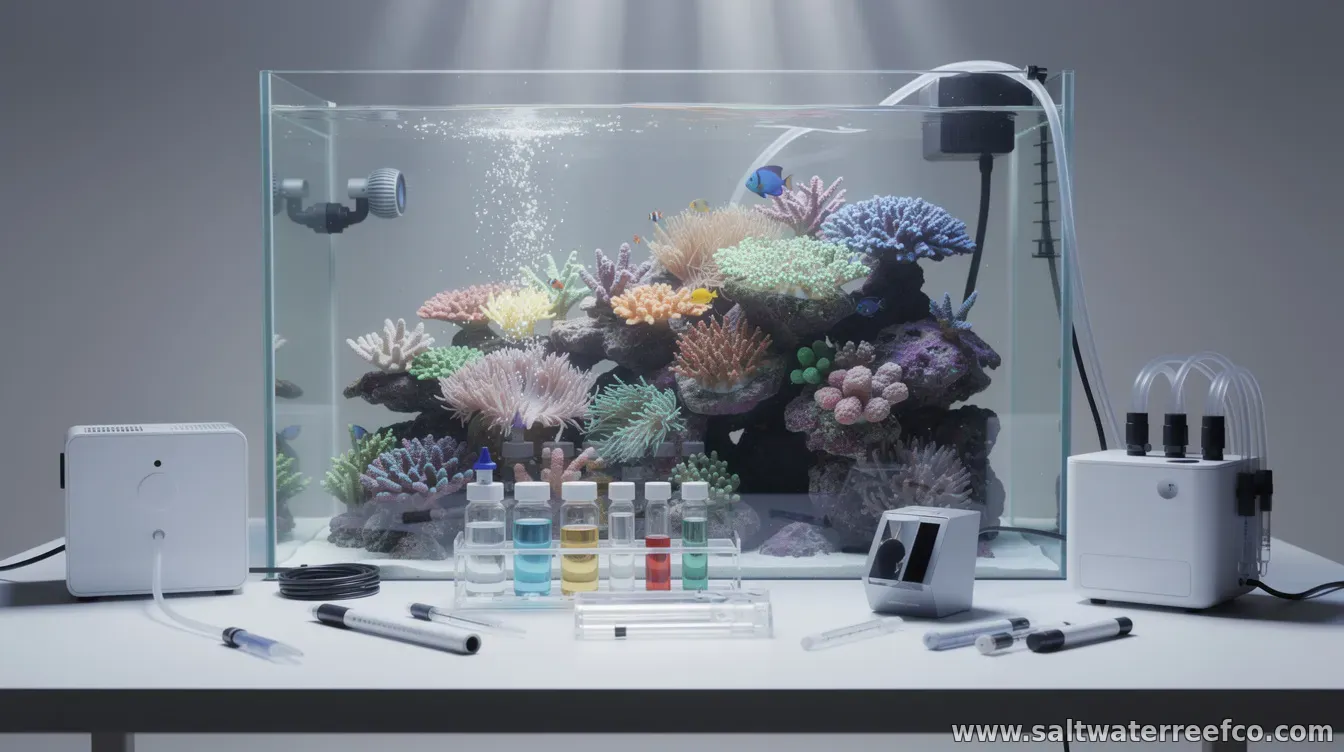
A reef tank succeeds less on one “perfect number” and more on stability. Corals and other invertebrates respond quickly to swings in temperature, salinity, pH, and key ions—so measuring the right parameters (and keeping them steady) is the foundation of a healthy aquarium. Below are the most important reef tank parameters, typical target ranges used by many reef hobbyists, and what each one helps protect against. Salinity and specific gravitySalinity, often measured as specific gravity, affects osmotic balance for corals, fish, and beneficial microbes. Most reef keepers aim for a stable range around 1.024–1.026 (specific gravity at typical calibration temperature, often ~25°C/77°F), and test consistently because evaporation can gradually raise salinity. TemperatureTemperature stability matters as much as the exact value. Many systems target roughly 24–26°C (75–79°F). Larger, sudden changes can stress corals and reduce resilience; even smaller shifts can matter over time in nutrient-poor or high-demand tanks. Alkalinity (KH)Alkalinity supports coral calcification and influences how easily carbonates/bicarbonates are available in the water. A commonly used target range is 7–11 dKH (many reef aquarists keep it closer to the middle of that band for consistency). Because alkalinity is also affected by dosing, water changes, and biological demand, tracking consumption helps prevent “drift.” Calcium and magnesiumCalcium and magnesium work together to sustain coral skeletal growth and reduce precipitation. Many reefs target calcium: ~400–450 ppm and magnesium: ~1250–1350 ppm. When magnesium is too low, calcium can become harder to maintain and may precipitate more easily, leading to chronic instability. As with alkalinity, the key is trend awareness: test frequently enough to understand how quickly your tank consumes these ions, then dose gradually if necessary. pH and alkalinity stabilitypH affects carbonate chemistry and the comfort of tank inhabitants. Many hobbyists aim for roughly 7.8–8.5, but the most important point is again stability and the relationship between pH and alkalinity. For example, poor gas exchange can push pH lower, while heavy nighttime CO2 accumulation can create daily swings. Nutrients: nitrate and phosphateNutrients are essential but must be balanced. Extremely low nutrients can starve corals and slow growth, while excess nutrients can fuel nuisance algae and stress sensitive species. Typical reef targets often land around nitrate (NO3): ~2–20 ppm and phosphate (PO4): ~0.02–0.1 ppm, though the “best” setpoint varies by coral type, feeding, filtration, and whether the system is SPS- or LPS-leaning. For many tanks, the practical strategy is to measure both nitrate and phosphate and then adjust feeding, export (skimming, media, refugium), and water change plans to bring them toward a stable, coral-friendly balance. Practical next steps for parameter management often start with a testing routine. Use reliable test kits or probes, calibrate as directed, and keep a log of results so you can identify whether changes come from consumption, dosing, or environmental swings. When adjusting, do it slowly—especially for alkalinity, salinity, and nutrients—because rapid corrections can be as harmful as gradual drift. For hobbyists building or upgrading a reef tank, the most effective habit is consistency: stable temperature, controlled salinity through top-off, monitored alkalinity/calcium/magnesium, and measured nitrate/phosphate. With those pillars in place, the aquarium becomes a more predictable environment—where corals and beneficial organisms can thrive. |
|
|
Next & Previous posts