1:50 AM Flatworms in Your Reef Tank: How to Identify and Eliminate Them |
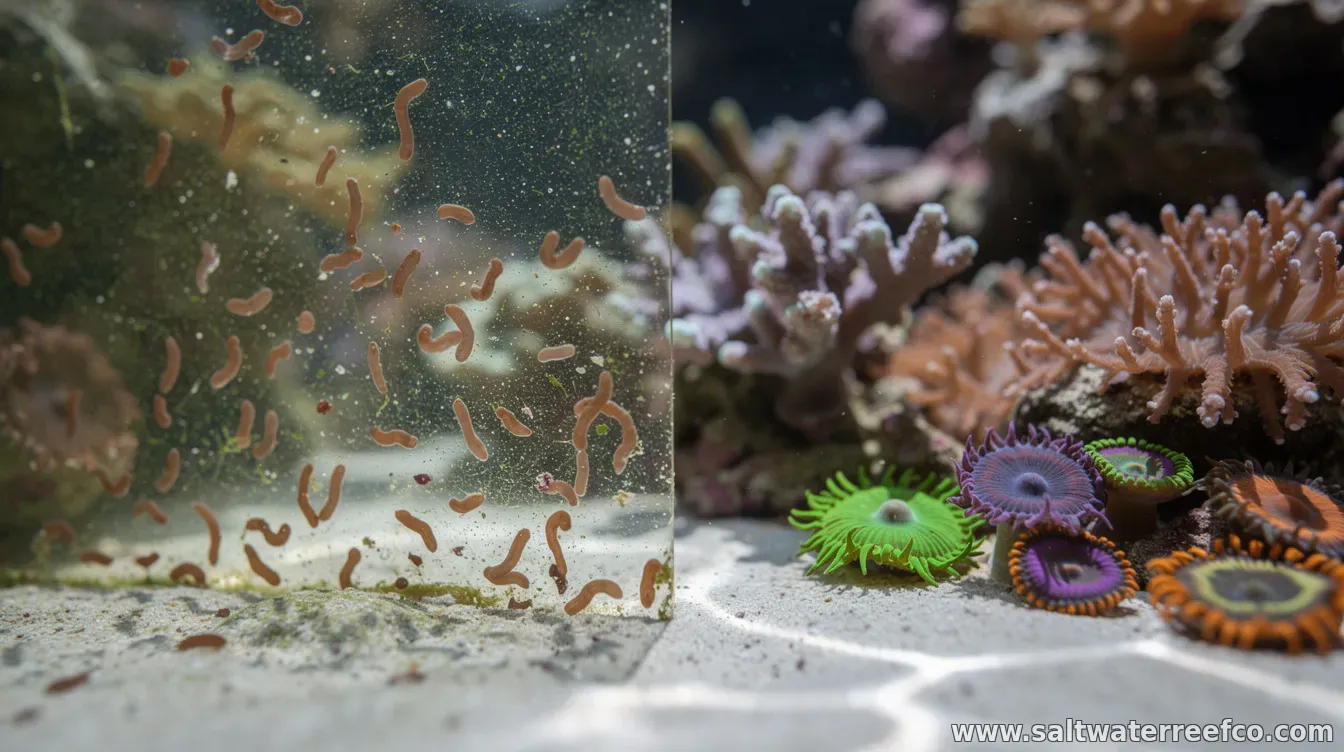
Flatworms are a broad group of aquarium invertebrates, but in reef tanks they are often discussed as pests because certain species can irritate coral tissue, compete for food, or spread faster than hobbyists expect. If you’ve noticed swarming, “wriggling” patches on glass, or newly stressed corals, it’s worth treating the situation as a tank-health issue that starts with correct identification. Not all flatworms are harmful. Some are harmless scavengers. The problem comes from nuisance species—particularly those that appear as flat, moving flecks or that gather in large numbers in response to available food and dissolved organics. The goal is to determine whether your tank has a pest species and then remove the conditions that let it thrive. How to identify nuisance flatworms in a reef tankPest flatworms in reefs are commonly recognized by their appearance and behavior. Many hobbyists first spot them as small, flat bodies on the sand bed, on rock overhangs, or along the aquarium glass. They may move in short bursts or glide slowly across surfaces—often becoming more noticeable when the lights change or when you feed the tank. Color can be a clue, but it’s not definitive. Some nuisance species are pale or translucent, while others look darker or more patterned. Size matters too: many troublesome flatworms are tiny—visible as specks—yet they aggregate into dense “carpets” or drifting clouds when populations increase. When flatworms signal a bigger problemFlatworms frequently surge when the tank environment offers abundant food sources, especially if nutrients are feeding the entire system. Common drivers include underperforming filtration, low flow in certain areas, overfeeding, detritus accumulation in rock pores, and “dead spots” in the sand or on the sand bed surface. Because flatworms feed on accessible organic material—sometimes including microfauna and leftovers—your first elimination strategy should be environmental: reduce excess food inputs and remove detritus where flatworms can gather. Otherwise, even successful short-term treatment can be followed by re-growth. Step-by-step: targeted control that protects the reefBefore you begin, consider planning control actions around livestock safety. Many reef flatworm interventions are best done gradually or with careful chemical handling to avoid harming corals and beneficial organisms. Start with the least disruptive measures and only escalate if the problem persists.
It’s also helpful to test the tank’s baseline conditions—particularly nutrient levels and any recent changes to lighting, dosing, or feeding routines. Stabilizing the system reduces the chance that flatworms rebound quickly after you reduce them. What “elimination” looks like in real timeEliminating flatworms isn’t usually a one-day event. You’re aiming for a decline you can observe: fewer individuals on glass and rock, reduced aggregation behavior, and less coral irritation or tissue stress. In most tanks, you should see measurable improvement over multiple water-change cycles, especially once detritus and food availability are controlled. If you see no reduction after consistent spot-removal and husbandry adjustments, you may be dealing with a different nuisance species than you initially thought—or with a recurring food source you haven’t fully addressed. Re-check feeding, flow dead spots, and filtration maintenance schedules. Preventing a returnAfter you reduce flatworm numbers, prevention is mostly about consistency. Avoid frequent “heavy feed” routines, remove leftover food promptly, and keep detritus from accumulating in low-flow areas. Regular maintenance—filter media changes, skimmer cleaning, and routine water changes—helps keep the tank from returning to the nutrient conditions that support nuisance populations. For long-term stability, consider adopting a routine that balances coral feeding with strong export capacity. When the reef ecosystem is functioning well and detritus is under control, nuisance flatworms are less likely to dominate. If you want, share what you’re seeing (color, size, where they cluster, and how they move), and whether corals show irritation. With those details, it’s easier to distinguish harmful nuisance flatworms from benign reef-dwellers and choose the safest next steps. |
|
|
Next & Previous posts