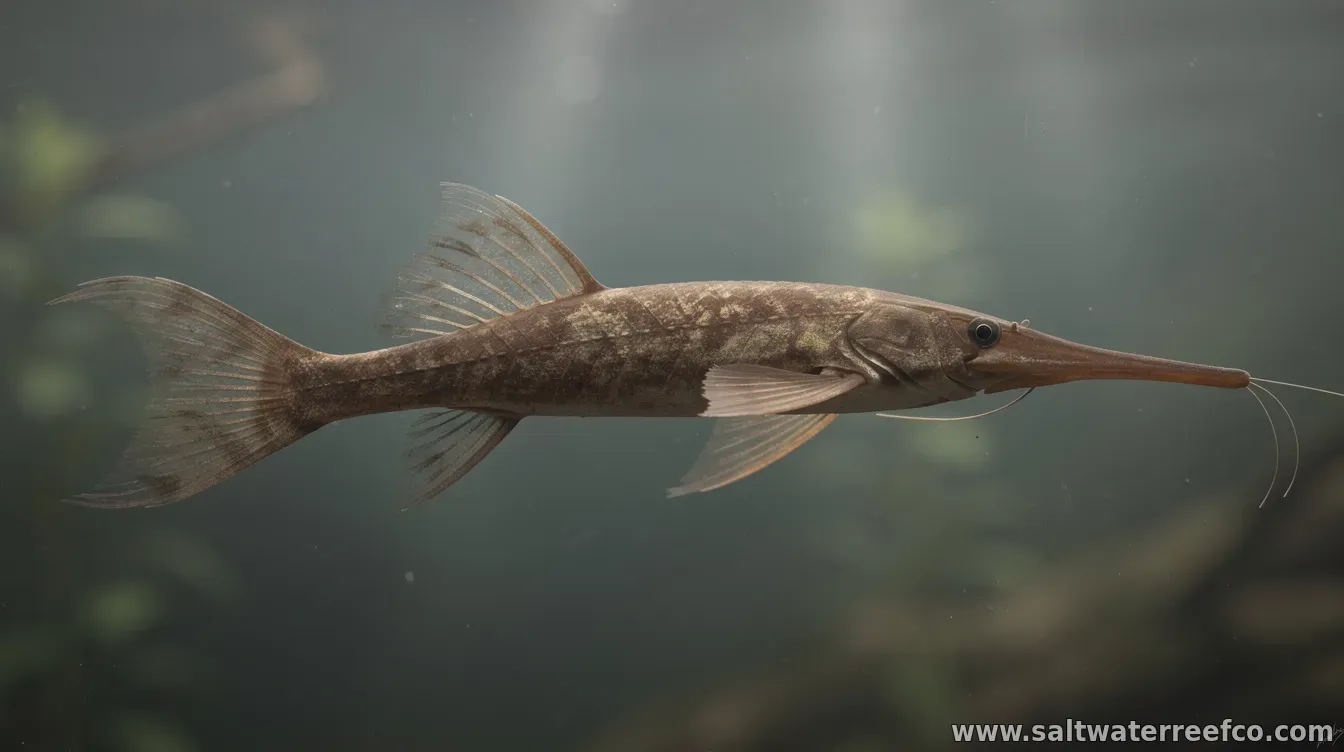
Farlowella acus is a small to medium-sized catfish native to tributaries and slow-moving rivers of South America. Its most distinctive feature is a remarkably elongated, flattened body with a narrow snout and a tail that resembles a twig. This camouflage helps the fish blend into submerged roots and plant matter in its natural environment.
Appearance and identification
Adults typically reach around 5–7 inches (12–18 cm) in length, though some individuals may be smaller in home aquariums. Coloration is generally pale brown to olive with subtle banding, providing additional concealment among aquatic vegetation and detritus.
Habitat and behavior
The species inhabits slow-growing or still waters with plenty of aquatic plants. Farlowella acus is a peaceful, non-aggressive species that prefers to stay near the substrate, often anchoring itself to driftwood or plant stems using its slender mouth and barbels.
Diet and feeding
In the wild, it feeds on biofilm, algae, and small invertebrates found on submerged surfaces. In captivity, a varied diet works best: algae wafers, blanched vegetables (like zucchini or cucumber), and occasional protein foods such as sinking pellets or frozen feeds. It generally prefers to graze along the tank’s substrate and decor rather than actively chase pellets.
Aquarium care and husbandry
Keep Farlowella acus in a well-filtered tank with gentle water flow to mimic its natural currents. Provide soft substrates to protect the delicate barbels, and maintain stable water parameters: temperature around 22–26°C (72–79°F), pH 6.5–7.5, and moderate hardness. A planted tank with driftwood and leaf litter helps recreate its preferred environment and offers hiding spots.
Reproduction and lifecycle
Breeding can be challenging in home aquariums and is rarely observed in hobby settings. When attempted, breeders often rely on stable, high-quality water and ample hiding places. Fry are small and require careful feeding as they grow.
Conservation notes
Farlowella acus is not currently listed as endangered, but habitat degradation and collection for the ornamental trade can impact wild populations. Responsible sourcing and captive breeding help reduce pressure on natural habitats.
|